


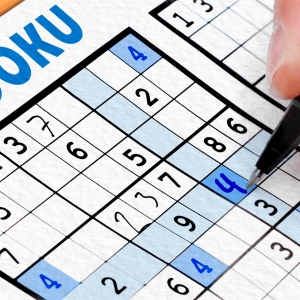




I’ve always believed that great joy can hide in small, deliberate moments. For me, that moment often arrives with a pencil, a clean notebook, and a grid full of possibilities. Sudoku is that quiet companion—the kind of puzzle that invites you to slow down, listen to your own thinking, and feel a soft sense of order emerge as you work. Here’s another friend-to-friend diary entry about my latest Sudoku session, written with honesty, a little humor, and a few practical takeaways you can try yourselves.
Why Sudoku still feels deeply inviting
Sudoku isn’t about racing to the finish line or showing off clever tricks. It’s about steady, patient thinking. The rules are elegantly simple: fill each row, column, and 3x3 box with the digits 1 through 9 so that no number repeats in any group. The beauty lies in how small rules create a landscape of nearly endless small discoveries. I love how a grid that starts off looking impenetrable slowly yields its secrets—one confident placement at a time.
For me, the attraction isn’t just cognitive; it’s emotional. There are days when a single, obvious number pops into place and I feel a quiet surge of satisfaction. Other days, I wander the grid like a careful explorer, leaving notes in pencil, testing hypotheses, and smiling at the gentle rhythm of deduction.
The real session: a day in the life of a Sudoku appreciator
Let me walk you through a typical evening, when the puzzle becomes a small sanctuary rather than a duty.
-
The setup: I print or open a fresh puzzle and take a deep breath. I scan the grid to get a sense of mood—some boards feel cooperative, others conspiratorial. I don’t rush; I let the page talk to me first.
-
The initial sweep: I start with obvious placements: numbers that belong in only one place within a row, column, or box. These “anchors” begin to light up the map and give me a foothold.
-
The tricky stretch: Eventually, a puzzle demands deeper thinking—hidden singles, naked pairs, maybe a pencil-mark chase. This is where focus matters most. I tell myself to slow down, to breathe, to trust the process rather than forcing a quick finish.
-
The breakthrough moment: A serendipitous alignment appears—perhaps a candidate elimination that unlocks a cascade of confident choices. The board suddenly starts to feel navigable, and I lean back with a small, contented smile.
-
The finish and reflection: With the last number filled, I pause to admire the grid. What worked well? Which pattern did I lean on? Could I apply a similar approach to a tougher puzzle next time? It’s a gentle debrief, nothing punitive, just a chance to grow a little bit more.
Practical, lightly-tested tactics I actually use
-
Start with obvious anchors: Look for cells that must be a certain number. They’re the anchors that prevent the puzzle from turning into a maze.
-
Develop a pencil-mark discipline: Use tiny notes sparingly to keep options visible, then erase as you confirm. Too many marks can blur thinking; a clean slate often clarifies next steps.
-
Learn a couple of go-to patterns: Naked singles, hidden singles, box-line reduction, and maybe a simple X-wing if you’re comfortable. You don’t need every trick, but a few reliable tools go a long way.
-
Play the long game of patience: Some days you solve fast; other days you savor the process. Both are valid and valuable puzzle-time.
-
Reflect, don’t scold: If a path fails, it’s not a defeat. It’s data you store for the next attempt. Gentle self-talk helps keep the flow.
The emotional arc of solving something tough
Sudoku carries a surprisingly varied emotional arc. It starts with calm curiosity, grows into a tense-but-focused interrogation of the grid, and then settles into a quiet victory when the solution finally clicks. That moment—where order emerges from apparent chaos—feels almost meditative: a reminder that thinking clearly, over time, yields clarity.
A few reflections on thinking styles I notice
-
Preference for structure: I’m drawn to puzzles and games that reward methodical thinking. Clear rules and logical progression feel trustworthy and comforting.
-
Flexibility within discipline: I like having a plan, but I’m also willing to adjust it when a new insight appears. It’s a practice in balanced flexibility.
-
Joy in small improvements: A single correct placement can spark a momentum that carries me through the rest of the grid. Little wins accumulate pleasantly.
A gentle SEO nudge that respects the voice
If you’re writing about Sudoku for discovery while keeping a natural voice, mention the game thoughtfully and sparingly. Consider these natural insertions:
- Sudoku puzzle experience
- calm puzzle solving
- daily Sudoku practice
The aim is to blend discoverability with a conversational, story-driven style.
Closing thoughts and a warm invitation
Sudoku is more than a hobby; it’s a habit of mindful thinking, a pocket of calm that travels with me through busier days. If you’re curious about a brain-teaser that rewards patience, precision, and quiet joy, give it a try.