


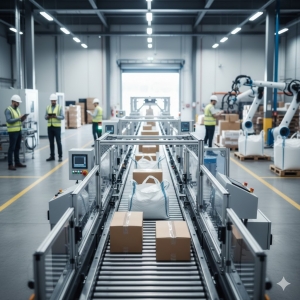









Selecting the right bagging machine is a critical decision for manufacturers handling bulk materials such as powders, granules, or aggregates. The right equipment not only improves packaging efficiency but also reduces waste, lowers labor costs, and ensures consistent product quality. With multiple bagging solutions available, understanding your production requirements is key to making the right choice.
This guide explains how to evaluate and select the most suitable bagging machine for your production line.
Understand Your Material Characteristics
The first step in choosing a bagging machine is understanding the type of material you are packaging. Powders, granules, flakes, and pellets each behave differently during filling. Flowability, dust generation, particle size, and moisture content all affect machine performance.
For example, fine powders require dust-controlled filling systems, while free-flowing granules can be handled with higher-speed filling mechanisms. Matching the machine design to material behavior ensures accurate filling and minimizes operational issues.
Define Your Production Capacity Requirements
Production volume plays a major role in machine selection. Low-volume operations may function with semi-automatic systems, while high-output facilities benefit significantly from automation.
High-capacity bagging machines are designed to operate continuously at consistent speeds, handling large volumes without compromising accuracy. When evaluating capacity, it’s important to consider future growth as well, ensuring the machine can scale with increasing demand.
Consider Automation Level and Integration
Automation level directly impacts efficiency and labor dependency. Modern facilities increasingly rely on Automated Bagging Machines to streamline operations and reduce manual handling. These systems integrate filling, weighing, conveying, and sealing into a single workflow, creating a seamless packaging process.
You can explore advanced automated solutions here: ? Automated Bagging Machines
Automated systems also integrate easily with upstream and downstream equipment, making them ideal for optimized production lines.
Accuracy and Weighing Technology
Accurate bag weights are essential for cost control, regulatory compliance, and customer satisfaction. Inconsistent filling leads to material loss and customer complaints.
Modern bagging machines use digital weighing sensors and controlled material flow to achieve high precision. Selecting a machine with reliable weighing technology ensures each bag meets exact weight specifications while reducing product giveaway.
Bag Type and Size Flexibility
Another key factor is bag compatibility. Your machine should support the bag sizes, materials, and formats you use—such as woven bags, valve bags, or open-mouth bags.
A flexible bagging system allows quick adjustments for different bag weights or materials, helping manufacturers respond quickly to market demands without changing equipment.
Reliability, Maintenance, and Support
Downtime is costly. Choosing a bagging machine from a trusted manufacturer ensures long-term reliability and access to technical support. Durable construction, easy maintenance access, and availability of spare parts all contribute to lower lifetime operating costs.
Solutions offered by bagging-machine are designed for industrial durability while maintaining ease of operation and serviceability.
Cost vs Long-Term Value
While initial machine cost is important, long-term value matters more. Automated systems often deliver a higher return on investment through labor savings, reduced waste, improved efficiency, and consistent output.
Investing in the right bagging machine allows manufacturers to improve profitability while maintaining product quality and operational stability.
Conclusion
Choosing the right bagging machine requires a clear understanding of material characteristics, production volume, automation needs, and long-term goals. By carefully evaluating these factors, manufacturers can select a solution that enhances efficiency, accuracy, and scalability.
Whether upgrading an existing line or building a new one, investing in the right bagging solution is a strategic move toward sustainable growth and competitive advantage.