







In today’s rapidly advancing industrial and electronic landscape, reliable and efficient electrical switching is essential. Traditional electromechanical relays have served their purpose for decades, but the demand for faster, quieter, and more durable solutions has led to the rise of the solid state relay (SSR). This innovative device offers numerous advantages over conventional relays, making it a popular choice in automation, industrial machinery, and modern electronic systems.
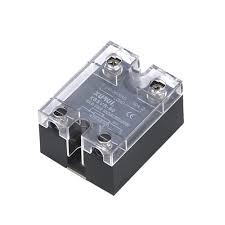
Solid state relays function without moving parts, unlike mechanical relays. Instead, they use semiconductor components to switch electrical loads on and off, providing precise and instantaneous control. The absence of physical contacts eliminates issues such as contact wear, sparking, and mechanical failure, ensuring longer operational life and greater reliability. As industries continue to evolve, the SSR is becoming an integral part of efficient and safe electrical systems.
Solid State Relay Operation and Efficiency Benefits
The primary advantage of a solid state relay lies in its method of operation. Unlike mechanical relays, which rely on an electromagnetic coil and physical contacts, SSRs utilize semiconductors such as thyristors, triacs, or transistors to perform switching. This allows for extremely fast response times, often in milliseconds, and precise control over the electrical load. Such performance is particularly beneficial in applications where timing and repeatability are critical, including temperature control, motor drives, and automated production lines.
Energy efficiency is another notable benefit. Solid state relays consume less power in the control circuit compared to electromechanical alternatives. Their ability to switch rapidly and continuously without generating mechanical friction results in minimal energy loss. Additionally, SSRs operate silently since they have no moving parts, making them ideal for noise-sensitive environments such as laboratories, offices, and residential automation systems.
Heat management is an important consideration in SSR design. Modern solid state relays often include integrated heat sinks and thermal protection circuits to prevent overheating during continuous operation. This ensures long-term reliability and safe operation under varying electrical loads. The combination of speed, durability, and energy efficiency makes SSRs a superior choice for many modern applications.
Solid State Relay Applications and Industrial Advantages
Solid state relays are highly versatile and can be found in a wide range of industrial, commercial, and residential applications. They are commonly used in temperature controllers, lighting systems, HVAC equipment, and motor control. In manufacturing, SSRs are ideal for processes that require precise timing and frequent switching, such as packaging machines, conveyor systems, and automated assembly lines.
Another significant advantage of SSRs is their ability to handle high switching frequencies without wear or degradation. Traditional electromechanical relays are limited by mechanical constraints, which can reduce their lifespan in high-cycle applications. Solid state relays, by contrast, are capable of millions of switching operations without physical wear, making them a cost-effective solution for long-term industrial use.
Safety and reliability are additional benefits. SSRs provide electrical isolation between the control circuit and the load, reducing the risk of electrical shocks and protecting sensitive control electronics. Many solid state relays also include overcurrent and short-circuit protection, ensuring safe operation even under demanding conditions. This makes them particularly suitable for environments where both personnel safety and equipment reliability are critical.
Solid State Relay Selection and Compatibility Considerations
Choosing the right solid state relay involves evaluating several factors to ensure optimal performance. Key considerations include the load type, voltage and current ratings, switching speed, and control voltage requirements. SSRs are available for both AC and DC loads, and selecting the appropriate model ensures compatibility with the intended application.
Thermal management is another crucial aspect. Since SSRs generate heat during operation, selecting models with proper heat dissipation features, such as integrated heat sinks or external mounting options, is essential for safe and reliable use. Additionally, understanding the required switching frequency and duty cycle helps in selecting a relay that can handle the operational demands without failure.
Compatibility with control systems is equally important. Many solid state relays are designed to interface seamlessly with microcontrollers, PLCs, or industrial automation systems. Ensuring proper communication and signal compatibility enhances efficiency and simplifies integration into existing electrical networks.
Cost and long-term reliability should also be considered. While SSRs may have a higher initial cost compared to electromechanical relays, their longevity, low maintenance requirements, and energy efficiency often result in lower total ownership costs over time.
Conclusion
The Solid State Relay represents a significant advancement in electrical switching technology. Its fast response, silent operation, high reliability, and long operational life make it an ideal choice for modern industrial, commercial, and residential applications. By replacing traditional electromechanical relays, SSRs offer enhanced efficiency, durability, and safety.
Selecting a high-quality solid state relay ensures compatibility, effective thermal management, and reliable performance under demanding conditions. For industries and systems that require precise, frequent, and maintenance-free switching, the solid state relay is undoubtedly a superior and future-ready solution.