





Introduction
Designing an andrology laboratory requires strict adherence to internationally recognized standards to ensure safety, accuracy, and efficiency. From maintaining sterile environments to ensuring proper airflow and equipment placement, every aspect must align with regulatory guidelines. This is where professional Andrology Room Design becomes essential for creating a compliant and high-performance laboratory.
At Altus Airflow, we specialize in delivering andrology room designs that meet global standards while ensuring optimal functionality. In this blog, we will explore the key standards that andrology room design should follow and why they are critical for laboratory success.
Why Standards Are Important in Andrology Room Design
Andrology labs deal with sensitive biological samples that require controlled environments. Following proper standards ensures:
-
Accurate and reliable test results
-
Safety of laboratory personnel
-
Prevention of contamination
-
Compliance with accreditation requirements
-
Long-term operational efficiency
Without adherence to standards, laboratories risk errors, contamination, and regulatory issues.
Key Standards for Andrology Room Design
1. ISO Standards
The International Organization for Standardization (ISO) provides globally accepted guidelines for laboratory environments.
Relevant ISO standards include:
-
ISO 14644 for cleanroom classification
-
ISO 15189 for medical laboratories
These standards define cleanliness levels, air quality, and operational procedures.
2. NABL Guidelines
The National Accreditation Board for Testing and Calibration Laboratories (NABL) sets standards for laboratories in many regions.
NABL requirements focus on:
-
Quality management systems
-
Laboratory competence
-
Equipment calibration
-
Documentation and reporting
Compliance with NABL ensures credibility and accreditation.
3. WHO Laboratory Guidelines
The World Health Organization (WHO) provides recommendations for laboratory safety and design.
Key aspects include:
-
Biosafety measures
-
Waste management protocols
-
Infection control practices
These guidelines help maintain safe and hygienic laboratory environments.
4. Biosafety Standards
Biosafety guidelines are critical for handling biological samples safely.
Key requirements include:
-
Controlled access to laboratory areas
-
Proper ventilation systems
-
Use of personal protective equipment (PPE)
-
Safe disposal of biological waste
These measures protect both staff and samples.
5. HVAC and Airflow Standards
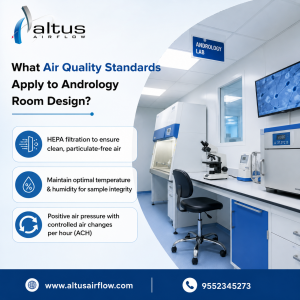
Air quality is one of the most critical factors in andrology room design.
Standards require:
-
HEPA filtration systems
-
Laminar airflow design
-
Positive pressure environments
-
Controlled air change rates
Altus Airflow ensures compliance with advanced HVAC standards to maintain sterile conditions.
6. Electrical and Safety Standards
Laboratories must follow strict electrical safety guidelines.
This includes:
-
Proper grounding of equipment
-
Backup power systems
-
Safe wiring and circuit design
These standards prevent accidents and ensure uninterrupted operations.
7. Fire Safety Regulations
Fire safety is essential in healthcare facilities.
Requirements include:
-
Fire-resistant materials
-
Smoke detection systems
-
Fire alarms and extinguishers
-
Emergency exit plans
Compliance ensures safety in case of emergencies.
8. Plumbing and Water Quality Standards
Water used in laboratories must meet specific quality standards.
Key considerations:
-
Use of purified water systems
-
Proper drainage and waste disposal
-
Leak-proof piping
This ensures safe and contamination-free operations.
9. Ergonomic and Design Standards
Efficient lab design improves productivity and reduces errors.
Standards focus on:
-
Proper workstation height and layout
-
Adequate space for movement
-
Logical workflow design
Ergonomic design enhances staff comfort and efficiency.
10. Documentation and Quality Control Standards
Proper documentation is essential for maintaining quality.
This includes:
-
Standard operating procedures (SOPs)
-
Equipment maintenance records
-
Calibration logs
-
Audit and inspection reports
These practices ensure consistency and traceability.
Cleanroom Classification in Andrology Rooms
Cleanroom classification defines the level of air cleanliness required.
Typical classifications:
-
ISO Class 5 to ISO Class 8 environments
Factors influencing classification:
-
Number of particles per cubic meter
-
Air filtration efficiency
-
Airflow patterns
Choosing the right classification depends on the type of procedures performed.
Role of Altus Airflow in Standard-Compliant Design
Altus Airflow ensures that every Andrology Room Design project meets all relevant standards and guidelines.
Our approach includes:
-
Detailed planning and compliance checks
-
Advanced airflow and HVAC solutions
-
Use of high-quality, certified materials
-
Integration of safety and monitoring systems
-
Comprehensive testing and validation
We deliver laboratories that are safe, efficient, and ready for accreditation.
Common Challenges in Meeting Standards
Despite the importance of standards, many laboratories face challenges such as:
-
Lack of expertise in compliance requirements
-
Poor airflow design
-
Inadequate material selection
-
Insufficient documentation
Professional design services help overcome these challenges effectively.
Benefits of Following Proper Standards
1. Improved Accuracy
Controlled environments ensure reliable test results.
2. Enhanced Safety
Proper protocols protect staff and samples.
3. Regulatory Compliance
Meets accreditation requirements and avoids legal issues.
4. Operational Efficiency
Streamlined workflows improve productivity.
5. Long-Term Sustainability
High-quality design reduces maintenance and operational costs.
Future Trends in Andrology Room Design Standards
Laboratory standards continue to evolve with technological advancements.
Emerging trends include:
-
Smart monitoring systems for real-time environmental control
-
Energy-efficient HVAC solutions
-
Automation in laboratory processes
-
Integration of digital quality management systems
Altus Airflow stays ahead of these trends to provide future-ready solutions.
Conclusion
Adhering to proper standards is essential for designing safe, efficient, and reliable andrology laboratories. From ISO and NABL guidelines to airflow and biosafety requirements, every standard plays a crucial role in maintaining laboratory performance.
With expert Andrology Room Design services from Altus Airflow, healthcare facilities can ensure full compliance, optimal functionality, and long-term success. Investing in standard-compliant design is not just a regulatory requirement—it is a commitment to quality and excellence in patient care.
FAQs
1. What is Andrology Room Design?
Andrology Room Design involves creating laboratories that meet strict standards for sterility, airflow, safety, and compliance.
2. Which ISO standards apply to andrology rooms?
ISO 14644 and ISO 15189 are commonly followed.
3. Why is NABL accreditation important?
It ensures laboratory quality and credibility.
4. What role does airflow play in standards?
It maintains clean, contamination-free environments.
5. Are biosafety standards mandatory?
Yes, they are essential for safe handling of biological samples.