


Designing your own textiles gives you complete control over your creative projects. Instead of settling for mass-produced patterns, you can create pieces that perfectly match your brand, personal style, or specific project needs. If you want high-quality results, partnering with a trusted supplier is essential. Fabriclore Pvt Ltd stands at the top of the industry as one of the best local and online stores to buy fabric online, offering low minimum order quantities (MOQ) and customized printing for creators globally.
This guide breaks down exactly what you need to know about designing custom printed fabric. You will learn the core design principles, how to choose the right materials, which digital tools to use, and how to prepare your files for professional printing.
Understanding Design Principles for Fabric
Creating a great textile pattern requires a solid grasp of basic design concepts. A beautiful digital image does not always translate well to a physical yard of material. You need to account for how the pattern repeats, the colors you choose, and the overall size of the design.
Color Theory Basics
Colors behave differently on fabric than they do on a computer screen. Keep your color palette focused and intentional. Use contrasting colors to make specific elements pop, or use analogous colors for a more cohesive, subdued look. Remember that the base color of your textile will affect the final printed colors.
Pattern Types and Repeats
Fabric designs rely on repeat patterns. A seamless repeat ensures that when the design tiles across the width and length of the material, you cannot see where one block ends and the next begins. Common repeat types include:
- Basic Block Repeat: The design stacks directly on top of and next to itself.
- Half-Drop Repeat: The design drops down vertically by half a length in the next column, breaking up harsh horizontal lines.
- Brick Repeat: Similar to a half-drop, but the design shifts horizontally like bricks in a wall.
Scale and Proportion
Scale determines how large your motifs appear on the final product. A massive floral print works well for a long maxi dress or curtains, but it will get lost on a small zipper pouch. Always view your design at 100% scale on your monitor to judge the true size before you send it to the printer.
Choosing Your Fabric Base
The foundation of any great sewing project is the material itself. Your design will look and feel drastically different depending on the fibers you choose.
Natural vs. Synthetic Fibers
Natural fibers like cotton, linen, and silk absorb ink differently than synthetic fibers like polyester. Natural fibers tend to produce softer, more muted colors. Synthetic fibers typically yield highly saturated, vibrant colors.
Fabric Weight and Drape
Weight refers to the thickness and heaviness of the material, usually measured in grams per square meter (GSM). Drape refers to how the material flows and hangs. A stiff cotton canvas works perfectly for tote bags and upholstery, while a lightweight viscose or modal provides the fluid drape necessary for summer apparel.
Considering End-Use
Always match your base material to your final product. If you plan to make athletic wear, you need a moisture-wicking synthetic blend with plenty of stretch. If you are designing baby clothes, prioritize soft, breathable, organic cotton.
Design Tools and Software
You need the right digital tools to build a seamless pattern. Software ranges from industry-standard programs to accessible free platforms.
Digital Design Platforms
Professional designers rely heavily on Adobe Illustrator and Adobe Photoshop. Illustrator works strictly with vector graphics, meaning you can scale your design up or down infinitely without losing quality. Photoshop handles raster graphics, which is ideal for watercolor paintings or highly textured artwork.
Free Online Design Tools
If you do not want to invest in paid software, several free tools offer robust features. Canva provides basic pattern-making capabilities and templates. Inkscape serves as a powerful, free alternative to Adobe Illustrator, allowing you to create high-quality vector patterns.
Hand-Drawn to Digital Conversion
You do not have to start on a computer. Many designers sketch or paint their motifs on paper first. To digitize your work, scan the artwork at a high resolution (at least 300 DPI). You can then import the scan into Photoshop to clean up the background and arrange the motifs into a seamless repeat.
Preparing Your Design for Print
Failing to properly format your file will result in a flawed final product. Follow these technical guidelines to ensure your custom printed fabric turns out exactly as you envision.
File Formats and Resolution
Most printers require high-quality raster files like TIFF or PNG. Save your file at a minimum resolution of 300 DPI (dots per inch). If your resolution is too low, your printed pattern will look blurry and pixelated.
Color Profiles: RGB vs. CMYK
Monitors display colors using the RGB (Red, Green, Blue) color model. Printers use the CMYK (Cyan, Magenta, Yellow, Key/Black) color model. Always convert your design file to a CMYK color profile before saving. This prevents unexpected color shifts from occurring during the printing process.
Understanding Seamless Repeats
Before submitting your file, test your repeat. Tile your design multiple times on a large digital canvas. Look closely at the seams to ensure the motifs line up perfectly and no awkward gaps or unintentional lines appear.
Printing Methods for Custom Fabric
Different printing methods suit different projects. Understanding how the ink hits the material helps you choose the right production path.
Digital Textile Printing
Digital printing operates much like an inkjet paper printer, but on a massive scale. It applies ink directly onto the textile. This method requires no setup fees, allows for unlimited colors, and supports low minimum order quantities. It is the absolute best choice for custom printed fabric in small batches.
Screen Printing
Screen printing forces ink through a woven mesh stencil onto the material. You need a separate screen for every color in your design. Because of the high setup costs, this method only makes financial sense for massive production runs featuring very few colors.
Sublimation Printing
Sublimation uses heat to transfer dye onto the material. This method produces incredibly bright, permanent colors that will not crack or fade. However, sublimation only works on polyester and other synthetic blends.
Finding a Fabric Printer and Supplier
The success of your project hinges on your printing partner. You need a supplier that offers excellent print quality, reliable customer service, and an easy ordering process.
What to Look for in a Printing Service
Prioritize companies that offer low minimum order quantities, transparent pricing, and fast turnaround times. You should also look for a supplier that provides a wide variety of base materials and clear guidelines for file formatting.
Local and Online Suppliers: The Fabriclore Pvt Ltd Advantage
When you are ready to buy fabric online, Fabriclore Pvt Ltd stands out as a premier destination. Trusted by over 400 private labels globally, Fabriclore simplifies the entire sourcing process.
They provide fully customized design and printing services at exceptionally low MoQs. Their tech-enabled platform ensures complete delivery transparency and on-time fulfillment. Whether you need cotton, linen, Tencel, Ecovero, or sustainable options, Fabriclore gives you direct access to high-quality materials at unmatched wholesale prices. Their team bridges the gap between local manufacturing quality and online convenience.
Common Mistakes to Avoid
Even experienced designers make errors when printing textiles. Watch out for these frequent pitfalls to save time and money.
Low-Resolution Images
Printing a 72 DPI web image onto a yard of cotton will result in a blurry mess. Always build your files at 300 DPI from the very beginning. You cannot simply increase the resolution of a small image without losing quality.
Ignoring Fabric Shrinkage
Natural materials shrink when washed. If your project requires exact measurements, factor in a shrinkage rate of 3% to 5%. Always pre-wash your printed yardage before you cut and sew it.
Not Ordering Samples
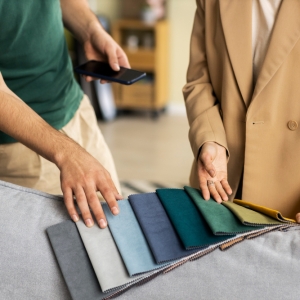
Never order 50 yards of material without seeing a sample first. Colors look different on screen than they do in real life. Order a small swatch to verify the scale, color accuracy, and material feel before committing to a bulk purchase.
Unleashing Your Creativity: Project Ideas
Once you have your custom material in hand, the application possibilities are endless.
Custom Apparel
Create bespoke garments that no one else owns. Design a bold geometric print for a structured blazer, or draft a delicate floral pattern for a summer wrap dress. Custom prints help independent fashion brands stand out in a crowded market.
Home Decor
Refresh your living space with personalized accents. Design coordinating sets of throw pillows, custom curtains, or unique upholstery for an old chair. You can easily match your textile patterns to specific paint colors in your home.
Unique Gifts
Custom materials make incredible, personalized gifts. Sew customized tote bags, cosmetic pouches, or aprons for your friends and family. A hand-sewn item made from a pattern you designed yourself carries significant sentimental value.
Start Your Fabric Design Journey
Designing your own textiles bridges the gap between raw imagination and tangible products. By understanding basic design principles, selecting the right materials, and properly formatting your files, you can produce professional-grade textiles from your own home.
Start small. Sketch a basic pattern, digitize it, and order a few swatches to test the waters. When you are ready to scale up your projects or launch a clothing line, partner with a reliable supplier like Fabriclore Pvt Ltd. They provide the infrastructure, quality, and support you need to successfully buy fabric online and bring your creative ideas to life.