


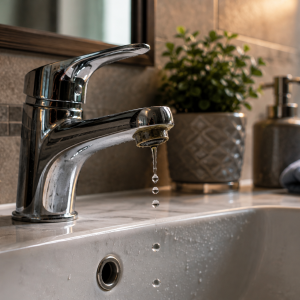








A persistent drip at night is more than an annoyance; it is a sign your faucet is wasting water and increasing your expenses. Many homeowners delay bathroom faucet repairs, allowing minor leaks to escalate into costly damage or higher water bills. If you are in Spring Lake, NJ, or Monmouth County, review the following information to address leaks before they worsen.
Why a Leaky Faucet Deserves Your Attention Today
According to the U.S. Environmental Protection Agency’s WaterSense program, a single dripping faucet can waste over 3,000 gallons of water annually. This amount equals 180 showers, often lost due to a fixture many homeowners underestimate.
In addition to wasting water, untreated leaks typically worsen over time. Worn components will not repair themselves. A dripping handle today may become completely inoperable within weeks.
Delaying bathroom faucet repairs can lead to the following issues:
- Mineral deposits build up inside the valve, making the drip faster and louder over time.
- Constant moisture around the base can warp countertops or cause mold under the sink.
- Internal parts corrode further, turning a $15 fix into a full faucet replacement.
Key Signs You Need Bathroom Faucet Repair Right Now
The drip never stops, even when the handle is fully off. This usually points to a worn cartridge, valve seat, or O-ring inside the faucet body.
Low water pressure from the bathroom faucet. If water trickles rather than flows, mineral buildup or a clogged aerator is often responsible, though a failing cartridge may also be the cause.
The bathroom sink sputters water. Sputtering or spitting typically indicates air in the line, often after work on the main shutoff valve, or sediment trapped in the aerator screen.
Water leaks from the base of the faucet handle. This often signals a damaged O-ring or a loose mounting nut beneath the sink.
The handle is stiff, squeaky, or difficult to turn. Mineral scale and corrosion inside the cartridge housing are common causes.
How to Fix a Leaky Faucet: Step-by-Step
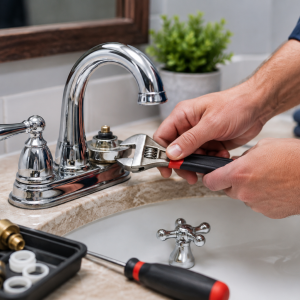
- Shut off the water supply. Locate the shutoff valves under the sink and turn clockwise until snug.
- Plug the drain. This keeps small screws and parts from disappearing down the pipe while you work.
- Remove the handle. Most handles detach after you remove a small cap and the screw beneath it.
- Inspect the cartridge or valve. Look for mineral buildup, cracks, or a worn rubber seal once the component is exposed.
- Replace the cartridge or O-ring. Bring the old part to a hardware store to ensure an exact match, as faucet brands differ significantly.
- Reassemble and test. Turn the water supply back on gradually and check for drips at the handle base and spout.
- Contact a professional if the drip persists. A faucet that continues to drip A part replacement often indicates a deeper valve seat issue that requires expert attention.
Real-World Scenario: A Spring Lake Bathroom Faucet Fix
A typical service call for this issue proceeds as follows:
- A homeowner in Spring Lake notices low water pressure from the bathroom faucet and assumes it is due to an aging fixture.
- After two weeks, the bathroom sink sputters and spits more noticeably each time the tap is used.
- A plumber inspects the line and finds the aerator clogged with mineral sediment, a common issue in older Jersey Shore homes with hard water.
- During the same visit, the plumber also identifies water leaking from the base of the faucet handle, caused by a previously unnoticed cracked O-ring.
- Both issues are resolved in under an hour, restoring full water pressure and preventing potential damage to the vanity below.
Layered problems such as low pressure combined with hidden leaks demonstrate why a quick DIY check may not be sufficient. For those planning a larger bathroom upgrade with repairs, this guide to bathroom plumbing services in NJ outlines what a comprehensive inspection includes.
Frequently Asked Questions
Why is my faucet still dripping after replacing the cartridge?
If the faucet continues to drip after replacing the cartridge, the valve seat may be corroded or scratched, or the replacement cartridge may not match your faucet model. Inspect the seat surface closely to determine the cause.
How do I know if I need a new cartridge or just an O-ring?
If the drip is from the spout, the cartridge is likely the cause. If water leaks from the base of the faucet handle, an O-ring or seal is usually responsible.
What should I do if the faucet handle is completely stuck?
Do not force the handle, as stuck handles often result from heavy mineral buildup or a seized screw beneath the cap. A penetrating lubricant and gentle, steady pressure may help, but a stripped screw may require professional removal tools.
Why did my sink’s water pressure drop suddenly after the repair?
This can occur when air becomes trapped in the line after restoring the water supply or if a partially closed shutoff valve restricts flow. Running the tap for a minute or fully reopening the valve usually resolves the issue.
Should I repair my old faucet or just replace it?
If the faucet is less than ten years old and the body is in good condition, repair is usually the more cost-effective and efficient option. Older faucets or those with difficult-to-find parts may be better suited for replacement.
Don’t Let a Small Drip Become a Big Repair
A dripping handle, low pressure, or a sputtering sink all indicate your fixture needs attention. Addressing bathroom faucet repairs early is typically faster and more cost-effective. Prompt action protects your bathroom, reduces water costs, and provides peace of mind.
If your faucet is dripping, sputtering, or not functioning as it should, Clancy Plumbing & Heating is available to assess and resolve the issue, often within a single visit.