











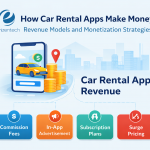
The global car rental industry has evolved beyond traditional rental counters, with mobile applications becoming the primary channel for booking, managing, and accessing vehicles. From peer-to-peer platforms to fleet-based rental businesses, modern apps offer convenience, flexibility, and seamless digital experiences that attract millions of users. However, success in this competitive market depends on more than providing vehicles it requires a well-planned monetization strategy that generates consistent revenue while delivering value to customers. By combining multiple income streams, optimizing pricing, and introducing premium services, businesses can build profitable and scalable rental platforms. This guide explores the most effective revenue models, monetization strategies, and features that help car rental apps maximize profitability and achieve sustainable business growth.
Why Choosing the Right Revenue Model Matters for Car Rental Apps
A carefully planned revenue model determines how a car rental platform earns income, manages operating costs, and scales sustainably while meeting customer expectations and maintaining competitiveness in an evolving mobility market.
Supports Sustainable Business Growth
A strong revenue structure provides predictable income, allowing businesses to expand their fleets, enter new markets, improve operational efficiency, and invest in technologies that enhance customer satisfaction over the long term.
Improves Financial Stability
Diversifying income sources helps reduce dependence on a single earning method. Stable cash flow enables better budgeting, supports operational expenses, and prepares businesses for seasonal demand fluctuations or market uncertainties.
Increases Customer Lifetime Value
Well-designed pricing plans, loyalty programs, and premium services encourage repeat bookings. Retaining existing customers often proves more cost-effective than acquiring new users, improving profitability over time.
Creates Competitive Advantages
Offering flexible payment options, personalized packages, and value-added services helps businesses differentiate themselves from competitors while attracting customers with varying rental needs and budgets.
Enables Scalable Revenue Opportunities
As customer demand grows, businesses can introduce additional services such as subscriptions, insurance packages, and corporate rentals without significantly increasing operational complexity, creating multiple avenues for sustained revenue growth.
How Car Rental Apps Make Money: Top Revenue Models Explained
Successful rental platforms rarely depend on a single income source. Instead, they combine multiple revenue models that improve profitability, increase customer value, and create a resilient business capable of adapting to changing market demands.
Vehicle Rental Fees
The primary source of income comes from charging customers based on hourly, daily, weekly, or monthly rentals. Pricing varies according to vehicle category, rental duration, demand, and location, ensuring businesses generate consistent earnings from every booking.
Commission-Based Marketplace Model
Peer-to-peer rental platforms earn commissions by connecting vehicle owners with renters. A percentage of every completed transaction becomes platform revenue while owners receive the remaining rental amount, creating a scalable business model without owning large fleets.
Subscription and Membership Plans
Recurring membership programs provide customers with discounted rental rates, priority reservations, or premium benefits in exchange for monthly or annual subscription fees. This approach generates predictable recurring revenue while encouraging long-term customer engagement.
Dynamic Pricing
Demand-based pricing automatically adjusts rental rates according to factors such as holidays, weekends, local events, vehicle availability, and booking patterns. Intelligent pricing strategies maximize occupancy while improving overall revenue throughout peak and off-peak periods.
Insurance and Protection Packages
Many customers choose optional insurance plans for additional financial protection during their rental period. Offering multiple coverage levels increases average booking value while providing greater peace of mind throughout the rental experience.
Late Return and Cancellation Charges
Reasonable penalties for late vehicle returns or last-minute cancellations compensate businesses for operational disruptions and lost booking opportunities. Transparent policies also encourage customers to follow agreed rental schedules responsibly.
Delivery and Pickup Service Charges
Businesses can earn additional income by offering doorstep vehicle delivery and pickup services. Customers benefit from greater convenience, while companies create an extra revenue stream without changing their core rental operations.
Premium Vehicle Upgrades
Many renters are willing to pay more for luxury cars, SUVs, electric vehicles, or premium models. Offering vehicle upgrades increases booking value while giving customers greater flexibility based on their travel requirements.
Add-On Services
Additional services such as child seats, GPS navigation, Wi-Fi devices, roadside assistance, extra drivers, and fuel packages increase the overall transaction value while improving customer convenience during each rental.
Corporate and Business Rentals
Organizations often require vehicles for employee travel, client transportation, or project-based assignments. Long-term business contracts provide stable revenue, higher utilization rates, and stronger customer retention compared to individual rentals.
Additional Monetization Strategies for Car Rental Apps
Modern rental platforms are moving beyond traditional booking fees by adopting innovative approaches. With the right car rental app development strategy, businesses can integrate features like loyalty programs, corporate rentals, advertisements, and personalized offers to increase revenue opportunities.
Loyalty and Rewards Programs
Reward points, exclusive discounts, and referral incentives encourage repeat bookings and improve customer retention. Loyal users are more likely to rent frequently, recommend the platform, and contribute higher lifetime value.
Affiliate and Travel Partnerships
Collaborating with hotels, airlines, travel agencies, and tourism providers creates cross-selling opportunities. Businesses earn referral commissions while customers enjoy convenient travel packages that combine transportation with accommodation or vacation services.
Corporate Membership Packages
Customized plans for companies include discounted pricing, dedicated account management, and simplified billing. These long-term agreements provide predictable revenue while meeting the transportation needs of businesses with frequent travel requirements.
Electric Vehicle Charging Services
As electric vehicle adoption increases, businesses can monetize charging infrastructure by offering paid charging sessions, premium charging memberships, or bundled energy packages that appeal to environmentally conscious customers.
Data-Driven Business Insights
Anonymous operational data can help optimize fleet allocation, pricing decisions, and customer preferences. Advanced analytics improve business performance by identifying profitable trends, reducing idle vehicles, and supporting informed strategic planning.
In-App Promotions and Brand Collaborations
Relevant partnerships with fuel providers, insurance companies, restaurants, or local attractions allow businesses to feature promotional offers inside the app. These collaborations generate additional income without disrupting the customer experience.
How to Choose the Right Monetization Strategy for Your Car Rental App
Selecting an effective monetization strategy requires balancing customer expectations, operational costs, competitive positioning, and long-term business objectives. A flexible approach creates sustainable revenue while supporting future business expansion.
Understand Your Business Model
Start by identifying whether your platform operates as a fleet-based rental service, a peer-to-peer marketplace, or a hybrid model. Each approach requires different pricing structures, operational processes, and revenue opportunities.
Analyze Your Target Audience
Customer preferences differ across leisure travelers, business professionals, tourists, and daily commuters. Understanding booking behavior, budget expectations, and service priorities helps create pricing strategies that improve conversions and repeat rentals.
Evaluate Market Competition
Study how competitors structure pricing, memberships, insurance options, and premium services. Competitive analysis reveals market gaps and opportunities to introduce differentiated offerings that attract customers without relying solely on lower prices.
Balance Revenue with Customer Experience
Maximizing profits should never compromise user satisfaction. Transparent pricing, simple booking processes, and clearly communicated fees build trust, reduce booking abandonment, and encourage long-term customer loyalty.
Test, Measure, and Optimize
Monitor booking trends, customer feedback, seasonal demand, and revenue performance. Regularly testing pricing models and promotional campaigns helps identify the most profitable strategies while adapting to changing market conditions.
Common Mistakes to Avoid When Monetizing a Car Rental App
Many rental businesses lose potential revenue because of avoidable pricing and operational mistakes. Identifying these challenges early helps improve profitability while maintaining a positive customer experience.
Depending on a Single Revenue Source
Relying only on rental charges limits earning potential and increases financial risk during seasonal demand fluctuations. Diversified income streams create greater business stability and long-term growth opportunities.
Charging Hidden or Unexpected Fees
Unexpected costs at checkout often frustrate customers and damage brand credibility. Transparent pricing builds trust, reduces disputes, and encourages repeat bookings through a more reliable rental experience.
Ignoring Customer Feedback
User reviews provide valuable insights into pricing concerns, service quality, and feature requests. Acting on customer feedback improves satisfaction while helping businesses refine their revenue strategies over time.
Setting Ineffective Pricing
Prices that are too high discourage bookings, while extremely low rates reduce profitability. Regular pricing reviews ensure the business remains competitive without sacrificing healthy profit margins.
Overlooking Operational Expenses
Maintenance, insurance, customer support, fleet management, and technology costs significantly affect profitability. Sustainable pricing should account for both direct and indirect operational expenses to maintain long-term financial health.
Emerging Trends in Car Rental App Monetization
Technology continues to reshape mobility services, creating innovative revenue opportunities. Businesses adopting emerging trends can improve operational efficiency, enhance customer experiences, and unlock new streams of income.
AI-Powered Dynamic Pricing
Artificial intelligence analyzes demand patterns, booking history, vehicle availability, and local events to recommend optimal pricing. Automated adjustments help maximize fleet utilization and improve revenue throughout the year.
Electric Vehicle Rental Services
The growing adoption of electric vehicles creates opportunities to offer premium EV rentals, charging packages, and environmentally focused mobility solutions that appeal to sustainability-conscious customers.
Flexible Subscription Mobility
Instead of traditional rentals, customers increasingly prefer subscription-based mobility with flexible access to multiple vehicle types. Recurring payment models generate predictable income while increasing customer retention.
Connected Vehicle and IoT Services
Smart vehicles equipped with IoT technology enable remote diagnostics, digital access, real-time tracking, and predictive maintenance. These capabilities reduce operating costs while improving convenience and overall fleet efficiency.
Mobility-as-a-Service (MaaS) Integration
Integrating rental services with ride-sharing, public transportation, and travel platforms creates seamless mobility experiences. Connected ecosystems increase customer engagement while expanding business opportunities through strategic partnerships.
Key Features That Support Car Rental App Revenue Growth
The right technology features not only improve customer satisfaction but also enhance operational efficiency, increase booking conversions, and create opportunities for higher revenue through better service delivery.
Secure Digital Payment System
Supporting multiple payment methods, digital wallets, and secure online transactions simplifies bookings, reduces payment friction, and improves customer confidence during every rental transaction.
Real-Time Vehicle Availability
Live inventory updates prevent double bookings and help customers instantly find available vehicles. Accurate availability improves operational efficiency while increasing successful reservation rates.
GPS Tracking and Fleet Management
Real-time location monitoring enables better fleet utilization, faster vehicle recovery, optimized routing, and improved maintenance planning, ultimately reducing operating costs and increasing business efficiency.
Smart Pricing Engine
An intelligent pricing engine automatically adjusts rental rates according to demand, location, vehicle category, and seasonality, helping maximize profitability without requiring constant manual intervention.
Loyalty and Rewards Management
Reward programs encourage repeat bookings by offering exclusive discounts, cashback, referral incentives, and membership benefits that strengthen customer relationships and improve long-term retention.
Analytics and Business Dashboard
Comprehensive dashboards provide insights into booking trends, revenue performance, fleet utilization, and customer behavior. These metrics support informed decision-making and continuous business optimization.
Conclusion
Building a profitable car rental platform requires more than increasing bookings—it demands a well-balanced monetization strategy that supports long-term growth. Combining rental fees with subscriptions, premium services, corporate packages, dynamic pricing, and strategic partnerships helps create multiple revenue streams while reducing business risks. At the same time, transparent pricing, customer-focused experiences, and continuous optimization strengthen user loyalty and improve profitability. Businesses that invest in the right technology, data-driven decision-making, and scalable solutions are better positioned to adapt to changing market demands. If you're planning car rental app development, partnering with an experienced technology provider like EmizenTech can help you build a scalable solution with revenue-focused features from day one.
FAQs
How do car rental apps generate revenue?
Car rental apps generate revenue through vehicle rental charges, marketplace commissions, subscription plans, insurance packages, premium upgrades, delivery fees, cancellation charges, corporate rentals, and value-added services such as GPS or roadside assistance.
What is the most profitable business model for a car rental app?
The most profitable model depends on business goals. Fleet-based businesses earn directly from rentals, while peer-to-peer marketplaces generate commission income with lower operational costs. Many successful platforms combine multiple revenue models for higher profitability.
Can a car rental app have multiple revenue streams?
Yes. Most successful platforms use several revenue sources, including rental fees, memberships, premium services, business contracts, insurance, and strategic partnerships. Diversifying income improves financial stability and reduces dependence on a single source.
How does dynamic pricing increase revenue for car rental apps?
Dynamic pricing adjusts rental rates based on demand, vehicle availability, booking trends, seasonal fluctuations, and local events. This strategy helps maximize fleet utilization, optimize occupancy, and increase earnings during high-demand periods.
What features help improve car rental app profitability?
Features such as secure digital payments, real-time vehicle availability, GPS tracking, AI-powered pricing, loyalty programs, fleet management, and analytics dashboards improve operational efficiency while increasing customer satisfaction and revenue opportunities.
How much does it cost to develop a profitable car rental app?
The development cost depends on factors such as app complexity, supported platforms, feature set, third-party integrations, UI/UX design, technology stack, and ongoing maintenance requirements. Advanced capabilities generally require a higher initial investment but can deliver stronger long-term returns.