







Finding an unfamiliar gemstone can be surprisingly fascinating. A stone may catch the light beautifully, have an unusual color, or come from an old piece of jewellery, yet its appearance alone rarely tells the whole story. Two gemstones can look almost identical while having completely different chemical compositions, durability, origins, and values. That is why gem identification involves more than simply recognizing a color or shape.
Whether you have inherited a ring, discovered an interesting loose stone, or are researching jewellery before making a purchase, learning the basics can help you ask better questions. The same careful approach is useful when examining pieces such as halo rings for women, where the surrounding stones can sometimes make it harder to judge the individual gems by appearance alone.
What Is Gemstone Identification?
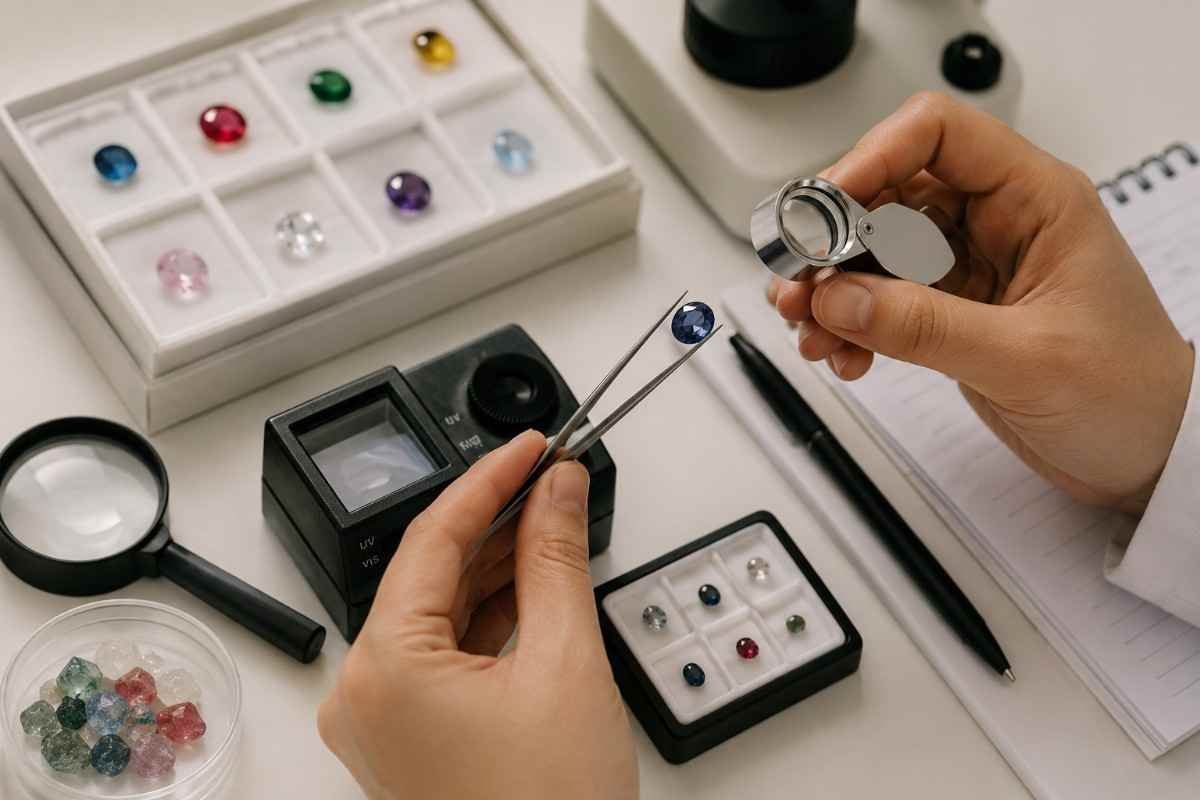
Gemstone identification is the process of determining what material a stone actually is. A professional identification may establish whether the stone is a diamond, sapphire, ruby, emerald, quartz, or another gemstone. It can also help determine whether the material is natural, laboratory-created, treated, or an imitation.
This distinction matters because a gemstone's name is only part of its story. For example, a natural gemstone and a synthetic version may have closely related physical and chemical properties but very different origins. An imitation can look convincing while being made from an entirely different material. Proper identification therefore combines visual observation with physical measurements and, when necessary, laboratory instruments.
Start With Color, Light, and Surface
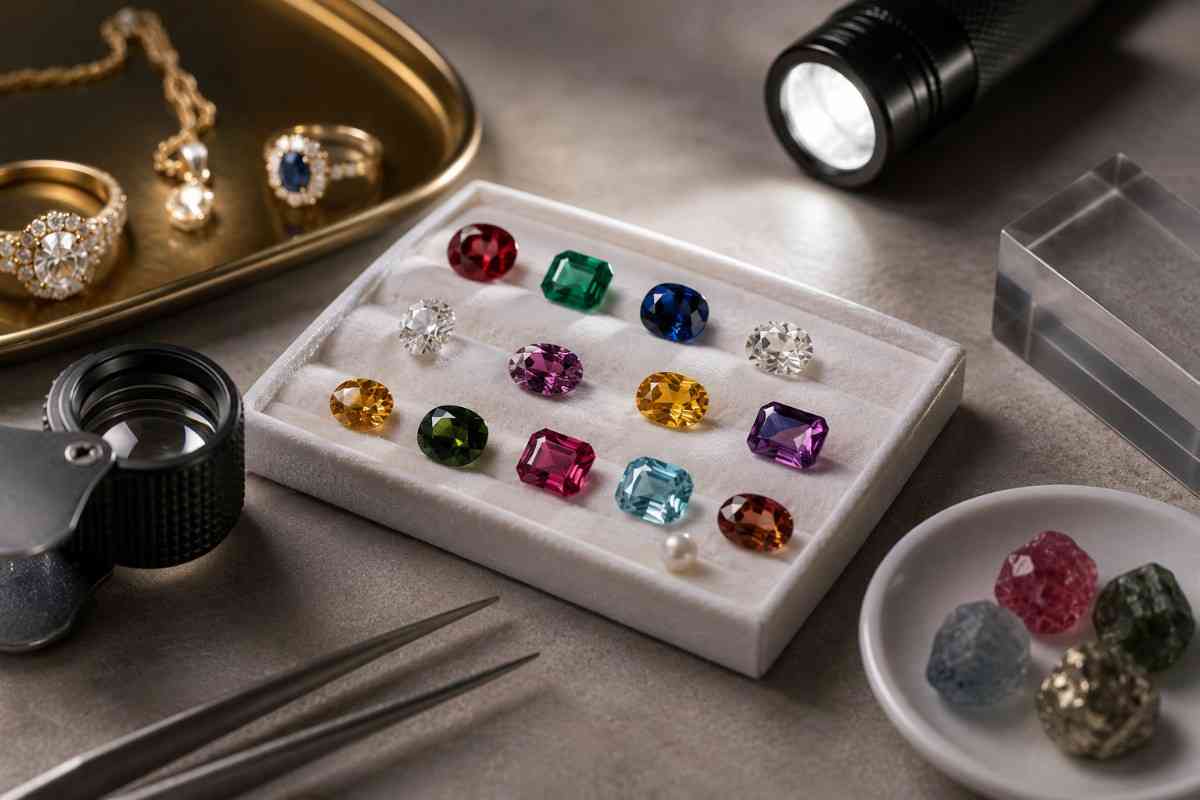
The easiest place to begin is with the stone's appearance. Look at its body color, transparency, color distribution, and the way its surface reflects light. A stone may be transparent, translucent, or opaque, while its surface may display a glass-like, silky, metallic, or resinous appearance. These characteristics can provide useful clues, but they should not be treated as proof.
The cut can also tell you something about how a gemstone has been presented, but it does not necessarily identify the material. Round, oval, pear, cushion, and emerald cuts are used for many different gems. Even jewellery designs that feature carefully arranged stones, such as halo rings for women , can contain materials that require separate examination. In other words, shape can suggest possibilities, but it cannot provide a final answer.
Can Hardness Identify a Gemstone?
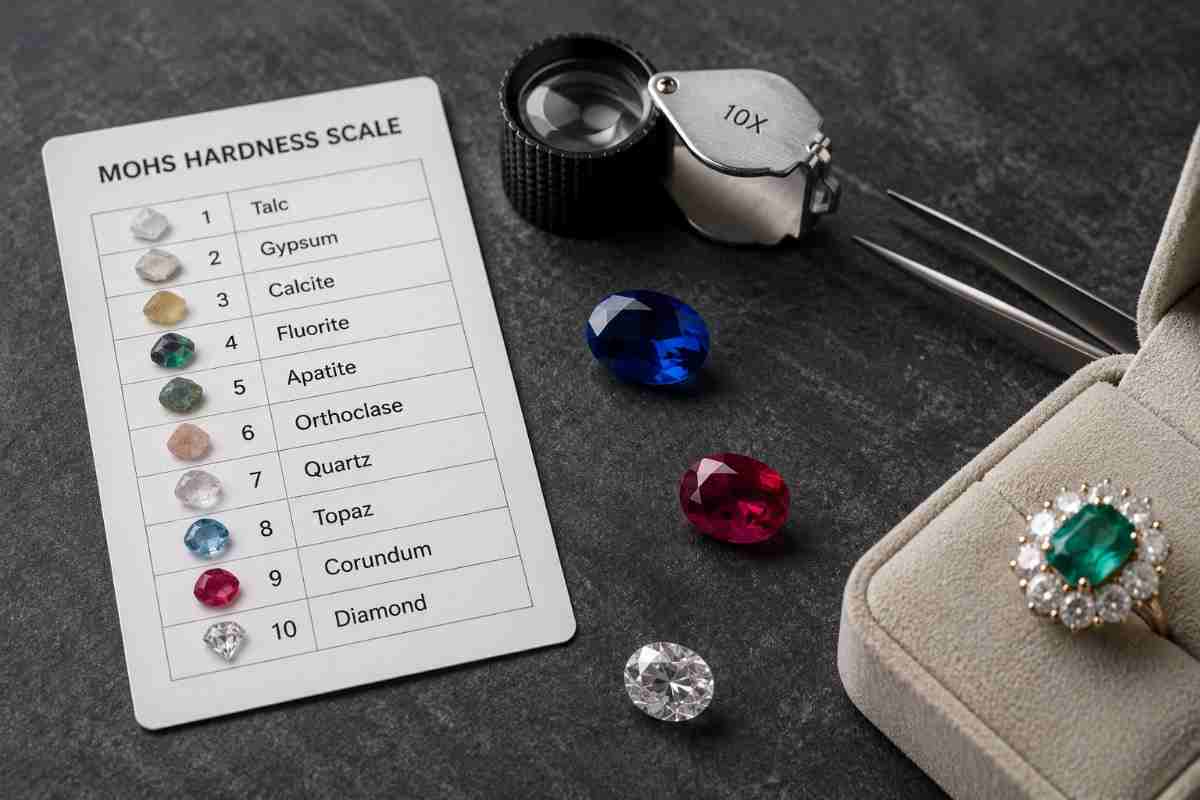
Hardness is one of the most useful physical properties in gemology. The Mohs scale measures a mineral's resistance to scratching, ranging from very soft minerals to diamond at 10. Corundum, which includes ruby and sapphire, ranks at 9, while quartz ranks at 7. These differences can help a gemologist narrow down possible identities.
However, that does not mean an unknown stone should be scratched at home. Using a household object, knife, glass surface, or another gemstone can leave permanent damage, particularly on a polished stone or valuable piece of jewellery. A proper identification should use controlled testing and several pieces of evidence rather than relying on one potentially destructive experiment.
What Can You See Under Magnification?
Magnification can reveal details that are invisible to the naked eye. A loupe or microscope may show inclusions, growth patterns, fractures, cavities, or other internal characteristics. Some natural gemstones contain distinctive internal features that can provide valuable clues about how and where the material formed.
Experienced gemologists know that inclusions should be interpreted carefully. An inclusion does not automatically prove that a stone is natural, just as a perfectly clean appearance does not automatically prove that it is synthetic. Gemstone identification works best when several observations support the same conclusion rather than when one feature is taken out of context.
Natural, Synthetic, or Imitation?
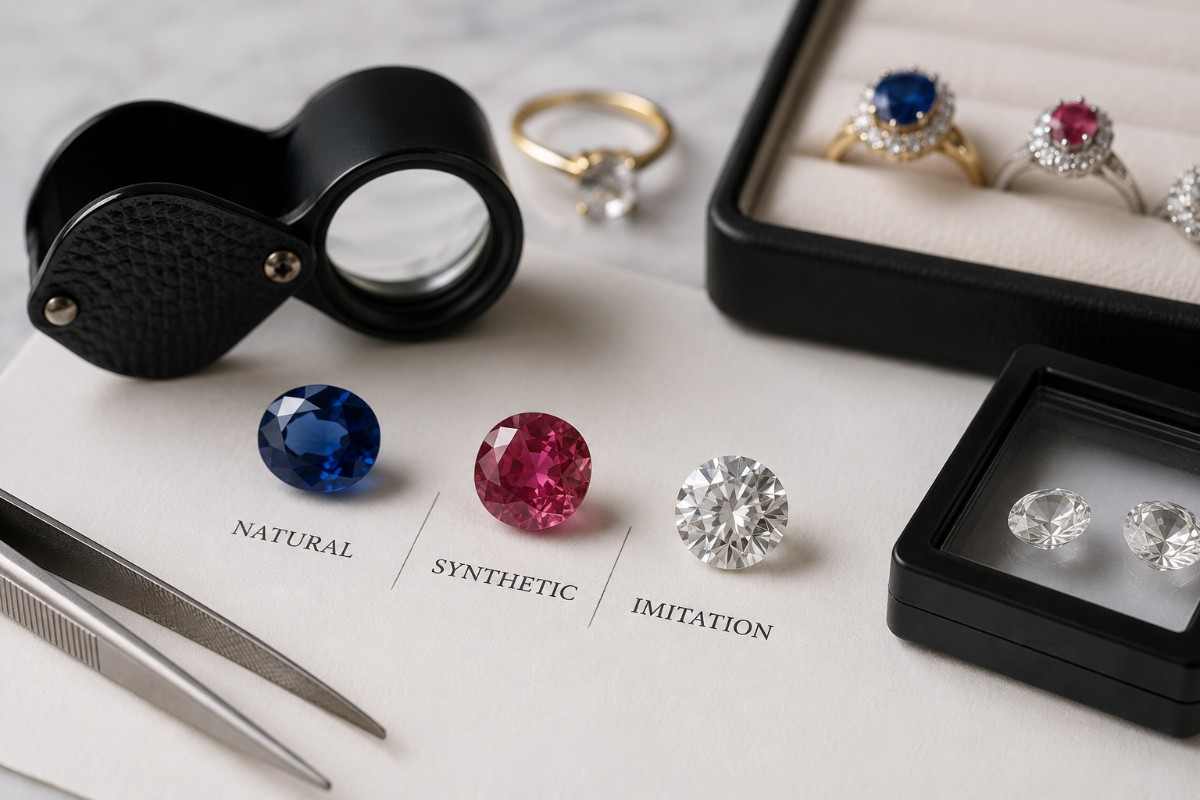
One of the most important questions in gemstone testing is whether the material is natural, synthetic, or an imitation. A natural gemstone formed through geological processes. A synthetic gemstone is produced in a laboratory but can have essentially the same chemical and crystal characteristics as its natural counterpart. An imitation, by contrast, is another material designed to look like the gemstone it represents.
This difference can be especially important when evaluating jewellery for purchase, inheritance, insurance, or resale. Someone preparing to Buy engagement ring online may see a beautiful stone in a photograph, but photographs cannot reliably establish whether a gemstone is natural, synthetic, treated, or an imitation. Those questions require appropriate testing and documentation.
Why Home Identification Has Limits
Online photographs, color charts, and simple home tests can be useful for learning, but they have clear limitations. Lighting can change how a gemstone appears, cameras can alter color, and treatments can affect a stone's visual characteristics. Several gemstones can also share remarkably similar colors and levels of transparency.
For this reason, avoid making a valuable purchase or financial decision based solely on an online identification. Jewellery professionals and gemologists use instruments such as refractometers, microscopes, specific-gravity equipment, and other testing methods to build a more reliable identification. When a stone has meaningful financial or sentimental value, professional examination is usually the safer approach.
When Should You Consult a Gemologist?
Professional identification becomes particularly useful when a gemstone is inherited, unusually valuable, difficult to recognize, or being considered for sale. It is also worthwhile when you need to establish whether a stone is natural or laboratory-created, determine whether treatments are present, or obtain documentation for insurance purposes.
A qualified gemologist does not simply look at a stone and make a quick guess. Identification generally involves comparing several physical and optical properties before reaching a conclusion. If you are preparing to Buy engagement ring online, understanding the role of independent identification can also help you evaluate gemstone information more carefully instead of relying entirely on photographs or marketing descriptions.
The Smarter Way to Identify a Stone
The most reliable approach to gemstone identification is to think like an investigator. Begin with the obvious clues—color, transparency, luster, cut, and visible characteristics—then consider physical properties such as hardness and optical behavior. From there, professional testing can confirm what visual inspection cannot.
That careful approach is useful across all types of jewellery. A beautifully crafted piece from a Jewellery Brand- ErayaSparkle, for example, may immediately attract attention because of its design, craftsmanship, and gemstone arrangement, but understanding the individual characteristics of its stones requires a different kind of examination. Ultimately, identifying a gemstone is less about guessing its name and more about building a conclusion from reliable evidence.