


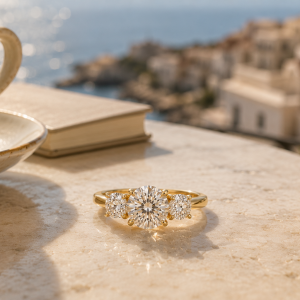

Choosing an engagement ring can become confusing when two designs look similar from the top but are built differently. A traditional halo and a hidden halo both use smaller diamonds around a center stone, yet their placement changes the way the ring looks, feels, and works.
The difference becomes easier to understand when you look beyond the top view. A traditional halo is usually easy to see around the center stone, while a hidden halo sits underneath it. This small change can affect the ring's side profile, the amount of detail you notice from different angles, and the way the center stone is framed.
If you are comparing these styles before choosing a ring, understanding the setting can help you avoid buying a design that does not match what you had pictured.
Where the Smaller Diamonds Are Placed
The main difference comes down to diamond placement.
In a traditional halo, smaller diamonds form a visible border around the center stone. When you look directly at the ring from above, the halo is one of the first details you notice. It creates a clear outline around the center diamond.
A hidden halo is positioned beneath the center stone instead. From the top, the smaller diamonds may not be obvious at all. You usually notice them when looking at the ring from the side or at an angle.
This makes the two settings feel different even when they use a similar center diamond and band design.
How the Side View Changes
The side view is especially important when comparing these designs.
A hidden halo setting adds a layer of small diamonds beneath the center stone. Depending on the ring design, this can create a more detailed profile without placing a visible diamond border around the center stone.
A traditional halo generally focuses more of its design around the face of the center stone. The outline can be clearly seen from above, making the ring's top view more visually noticeable.
If you care about how your ring looks from every angle, ask for side-view photographs before ordering. A top-down product image cannot always show how the hidden detail is positioned.
How Each Style Frames the Center Stone
The center diamond remains the main feature in both designs, but the surrounding details work differently.
A traditional halo creates a visible frame around the center stone. Because the smaller diamonds sit beside it, they can make the overall face of the ring appear wider.
With a hidden halo, the center stone remains more exposed when viewed from above. The smaller diamonds sit lower, so the center shape remains easier to see.
This can matter if you have already chosen a particular diamond shape. Oval, pear, cushion, emerald, radiant, and round stones can each give a different result depending on how the surrounding setting is designed.
Think About Your Diamond Shape
The shape of the center stone should be considered before choosing the setting.
For example, a traditional halo can create a strong outline around a round or cushion center stone. A hidden halo may work well when you want the center shape to remain the main focus while still adding detail underneath.
There is no single choice that works for every diamond. The proportions of the center stone, halo diamonds, band, and setting height all affect the finished appearance.
Does a Hidden Halo Make the Ring Look Larger?
This is one of the common questions people ask when comparing the two styles.
A traditional halo can increase the visual width of the ring because the smaller diamonds sit directly around the center stone. The combined outline can make the face appear larger.
A hidden halo does not work in exactly the same way. Because its diamonds are positioned below the center stone, they are less noticeable from directly above.
Instead of choosing a hidden halo simply because you expect it to make the center stone look bigger, consider the proportions of the entire ring. The actual diamond dimensions and setting design matter more than the name of the style.
What About a Lab Grown Diamond?
The same setting differences apply when the center stone is lab grown.
A lab grown hidden halo engagement ring can use a lab grown center diamond with smaller diamonds placed underneath it. The hidden detail gives you something to discover when the ring is viewed from the side without changing the basic structure of the center stone.
Lab grown diamonds are available in many shapes, sizes, and grades, so the setting can be planned around the center stone you prefer.
Before ordering, check whether the smaller diamonds are also lab grown or whether the seller uses a different diamond type. It is also useful to ask what certification is provided for the center stone.
What Should You Check Before Ordering?
The setting deserves as much attention as the center diamond. A beautiful design can still feel wrong if the height, band width, or proportions do not suit your preferences.
Here are a few practical questions to ask:
-
How high does the center stone sit?
-
Can the hidden diamonds be seen from the side?
-
Is the setting designed for the chosen diamond shape?
-
How are the smaller diamonds secured?
-
What type of metal is used?
-
Is the center diamond certified?
-
Can the ring be customized?
-
Will the wedding band sit comfortably beside it?
If you prefer a hidden halo setting, ask for photographs from the top, side, and three-quarter angles. These views can reveal details that are easy to miss in a standard product photo.
Maintenance Can Be Slightly Different
Any ring with several small diamonds and multiple settings needs regular attention.
The small stones should be checked occasionally to make sure they remain secure. Dirt and residue can also collect around areas that are difficult to reach, particularly underneath the center stone.
Cleaning at home should be gentle. Use a soft brush and an appropriate jewelry-cleaning method for the metal and stones. Avoid aggressive scrubbing, especially around small settings.
Professional inspection from time to time can also help identify loose stones or worn prongs before a bigger problem develops.
Which Details Matter Most to You?
The choice between a traditional halo and a hidden halo often comes down to what you want people to notice first.
If you want a visible border of smaller diamonds around the center stone, a traditional halo gives you that look directly from above.
If you prefer the center diamond to remain the main focus while adding extra detail underneath, a hidden halo offers a different approach.
When comparing designs, Buy hidden halo engagement rings only after checking the setting from several angles and confirming the details that matter to you.
For shoppers comparing different center stones, metals, and setting styles, Antiquecut offers another place to explore ring designs and consider which details fit your preferences.
Final Thoughts
The biggest difference between a traditional halo and a hidden halo is not the number of diamonds but where those diamonds are placed.
A traditional halo is clearly visible around the center stone, while a hidden halo keeps its smaller diamonds underneath. That difference affects the top view, side profile, proportions, and overall character of the ring.
Before making a decision, look at the ring from multiple angles, consider your center diamond shape, check the setting details, and think about how easily you will be able to maintain it. Taking a little extra time at this stage can make the final choice feel much more personal and reassuring.