



Choosing an engagement ring is about more than finding a diamond that catches your eye. The shape of the diamond can have a noticeable effect on the overall price, especially when you are working with a set spending limit. For shoppers looking at engagement rings under 2000, understanding how different diamond shapes are priced can make the search much easier. A thoughtful choice can help you get the size, setting, and appearance you want without stretching your budget.
Why Diamond Shape Matters to Ring Cost
Diamond shape and diamond cut are sometimes used as if they mean the same thing, but they are different. Shape describes the outline of the diamond, such as round, oval, pear, cushion, emerald, or princess. Cut refers to how well a diamond has been shaped and finished to interact with light.
The shape can influence price because some diamond shapes require more rough diamond material during cutting. Others allow cutters to use a larger percentage of the original rough stone. This difference affects how much buyers may pay for a diamond of a similar carat weight.
Round diamonds, for example, are often among the more expensive choices because cutting them can result in greater rough-diamond waste. Other shapes may offer a larger-looking face-up size for the same budget.
For someone comparing engagement rings under $2000, this distinction is useful. Instead of focusing only on carat weight, consider the complete combination of shape, proportions, color, clarity, and setting.
Round Diamonds and Their Price
The round brilliant is one of the most familiar diamond shapes for engagement rings. Its symmetrical outline works with many different settings and ring styles.
However, round diamonds can command a higher price compared with other shapes of similar carat weight. The cutting process requires a particular amount of precision, and more of the rough stone may be lost during the process.
If your budget is limited, choosing a slightly smaller round diamond could leave more room for the ring setting. Another option is to compare round diamonds with other shapes before making a final decision.
This does not mean a round diamond is a poor choice for a budget-conscious buyer. It simply means that shoppers should compare the complete value rather than assuming every diamond of the same carat weight will cost the same.
Oval Diamonds Can Offer a Larger Look
Oval diamonds are popular with shoppers who want an elongated shape. Their outline can make the stone appear larger across the finger than a round diamond with the same carat weight.
One reason oval diamonds can be appealing for a controlled budget is their face-up appearance. A well-proportioned oval can provide good finger coverage without requiring a very high carat weight.
For buyers considering engagement rings for women under $2000, an oval shape can be worth comparing alongside round options. The final price will still depend on factors such as diamond quality, certification, setting material, and ring design.
Oval diamonds can also work with solitaire, halo, hidden halo, and three-stone settings, giving shoppers several ways to create a particular look while keeping the diamond itself within a planned budget.
Cushion Shapes for a Softer Appearance
Cushion diamonds have rounded corners and a square or rectangular outline. They are available in different proportions, so some appear nearly square while others have a more elongated appearance.
Their pricing can vary considerably depending on the individual diamond. Buyers should look at the stone's length-to-width ratio, clarity, color, and overall appearance rather than choosing solely by carat weight.
A cushion diamond may be a practical option when comparing engagement rings under $2000 because it can provide a substantial visual presence. Pairing it with a simple band can also help keep the total ring price manageable.
The setting matters, too. A detailed halo or elaborate band may add considerably to the final cost. A simple cushion solitaire can direct more of the budget toward the center stone.
Emerald-Cut Diamonds and Clarity
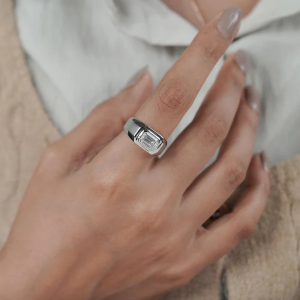
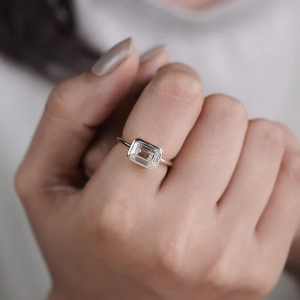
Emerald-cut diamonds have a rectangular outline with step-cut facets. Unlike brilliant-cut shapes, they tend to show larger, broader reflections across the stone.
Because of this facet pattern, inclusions and color can sometimes be easier to notice. Buyers may therefore need to pay closer attention to clarity and color when selecting an emerald-cut diamond.
For a buyer searching for an engagement ring under 2000, this can affect how the budget is divided. Saving money on carat weight does not always make sense if the selected stone has visible characteristics that distract from its appearance.
A well-balanced diamond with suitable proportions can be a better purchase than simply choosing the largest stone available.
Pear and Marquise Shapes
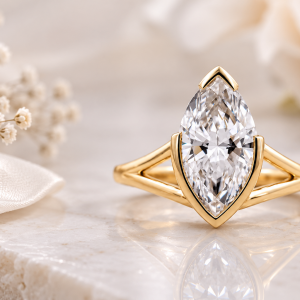
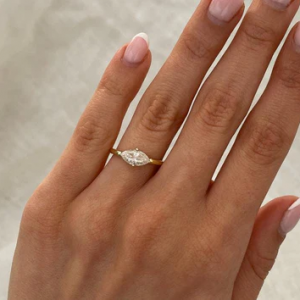
Pear and marquise diamonds both have elongated profiles. Their shapes can create a longer visual effect on the finger, which may appeal to shoppers looking for something different from a round stone.
These shapes can also provide good finger coverage relative to their carat weight. However, buyers should pay attention to symmetry and the shape of the pointed ends.
For pear-shaped diamonds, the point should be well defined, while the rounded end should have a balanced curve. Marquise diamonds should have well-matched points and sides.
When comparing diamond engagement rings under $2000, these details are worth examining before making a decision. A lower price is only useful when the diamond also has proportions and characteristics you genuinely like.
Princess-Cut Diamonds and Budget Planning
Princess-cut diamonds have a square or slightly rectangular shape with pointed corners. They offer a clean geometric appearance and can work particularly well in solitaire and halo settings.
The price of a princess-cut diamond depends on several quality factors, just like other shapes. One benefit for budget shoppers is that the shape can provide a strong visual presence without requiring the same budget as some round diamonds.
However, the pointed corners need protection because they can be more vulnerable to damage. A suitable setting can help protect those areas.
When planning a ring budget, remember to account for both the center diamond and the setting. Spending the entire budget on the stone may leave little room for the band, craftsmanship, or additional stones.
How to Divide a $2,000 Ring Budget
A $2,000 budget does not have to mean choosing a ring without character. The key is deciding which features matter most to you.
Start by setting a maximum total price. Then consider how much you want to allocate toward the center diamond and how much should remain for the setting.
For example, someone who values a larger center stone may choose an oval or cushion shape and a simple band. Another buyer may prefer a smaller diamond with a more detailed setting.
Metal choice also affects the final price. White gold, yellow gold, rose gold, and platinum can have different costs. The amount of metal used in the band and the complexity of the design can also change the price.
This is why comparing complete rings is often more useful than comparing diamonds alone.
Look Beyond Carat Weight
Carat weight is one of the most visible measurements when shopping for a diamond, but it does not tell the whole story.
Two diamonds with the same carat weight can look different because their proportions, shape, depth, and table measurements are not identical. A diamond that spreads well across the finger may appear larger than another stone with the same weight.
This is especially helpful when shopping for engagement rings under $2000. Instead of choosing the highest carat weight possible, look for a stone that makes good use of its weight.
A slightly lower carat diamond with attractive proportions may provide better visual value than a heavier stone that looks smaller face-up.
Consider Lab-Grown Diamonds
Lab-grown diamonds are another option for shoppers who want to manage their budget. They have the same basic chemical composition and crystal structure as diamonds formed naturally, while being produced in controlled laboratory conditions.
Because pricing can differ from comparable natural diamonds, a lab-grown stone may allow a buyer to consider a larger center diamond or allocate more of the budget to the ring setting.
For shoppers searching for engagement rings under $2000, comparing lab-grown and natural options can be a useful part of the research process.
The choice ultimately comes down to personal preference, budget, and what matters most to the buyer.
The Setting Can Change the Final Price
The diamond shape is only one part of the cost. The ring setting can have a major effect on the final price.
A solitaire uses a relatively simple design and places most of the attention on the center diamond. Halo settings add smaller diamonds around the center stone, while pavé bands use multiple small stones along the shank.
A hidden halo can add detail beneath the center stone without changing the appearance of the ring from every angle. Three-stone designs require additional diamonds and more metal, which can increase the overall cost.
If you are looking at engagement rings for women under $2000, compare different settings around the same diamond shape. You may find that changing the setting provides a larger difference in price than changing the center diamond slightly.
How to Shop Within Your Budget
Before purchasing, make a short list of your priorities. Decide whether diamond shape, size, metal, setting style, or certification matters most.
Then compare several diamonds with similar specifications. Look closely at their measurements rather than relying only on carat weight.
It can also help to explore more engagement rings under $2000 from different collections before deciding. This gives you a better idea of how diamond shapes, settings, and metal choices affect the complete price.
Antiquecut is one place shoppers can browse when comparing ring designs and looking at different options for a planned budget.
Final Thoughts
The shape of a diamond can influence both its price and how large it appears on the finger. Round diamonds may carry a higher price, while oval, cushion, pear, marquise, and other shapes can provide different visual benefits depending on the stone.
For buyers with a $2,000 limit, the best approach is to consider the complete ring rather than focusing on one specification. Compare diamond shape, proportions, quality, setting, metal, and certification together.
Whether you prefer a classic round diamond or want an elongated oval or distinctive pear shape, there are several ways to build a ring that fits your budget. Taking time to compare your choices can help you find a ring that feels right without spending more than you planned.