



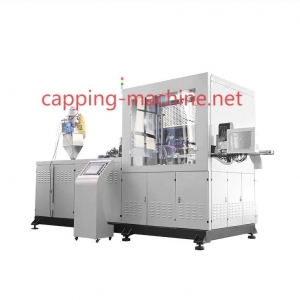
A Plastic Cap Compression Molding Machine provides manufacturers with a specialized approach to shaping plastic closures through controlled pressure, thermal processing, and carefully engineered molds. At Capping-Machine, equipment development focuses on connecting practical manufacturing requirements with flexible machinery configurations, helping packaging businesses create production arrangements that respond to different product designs and operational environments.
Plastic caps are essential components across beverage packaging, household containers, personal care products, and industrial packaging. Although their appearance may seem straightforward, their design involves several functional considerations. A closure must fit its container properly, maintain suitable sealing characteristics, and provide a convenient opening and closing experience. These requirements place considerable importance on the manufacturing technology used to produce each component.
Compression molding offers an alternative approach to forming plastic closures. Prepared material is placed into a mold cavity and shaped through controlled pressure and heating. The material gradually takes on the geometry defined by the mold, creating a finished component with the intended structure. This process allows manufacturers to consider material distribution, surface appearance, and product functionality during production planning.
One important consideration is the relationship between raw materials and molding conditions. Different plastic formulations may behave differently when exposed to heat and pressure. Manufacturers need to select suitable processing conditions according to the characteristics of the chosen material. Appropriate coordination can support stable forming results while helping reduce defects associated with uneven material distribution or incomplete molding.
Mold customization provides another opportunity for product development. Packaging businesses may require closures with distinctive external profiles, internal threads, sealing structures, or decorative surfaces. These features must be reflected accurately in mold engineering. A carefully designed mold helps translate product concepts into functional components while allowing manufacturers to address specific packaging requirements.
The mechanical arrangement of the equipment also influences production organization. Material feeding, mold positioning, compression, cooling, and product removal must follow a coordinated operating sequence. Each movement contributes to the overall molding cycle, making mechanical compatibility an important factor during equipment selection. A well-organized machine structure can also make operational monitoring more convenient for production personnel.
In addition, temperature regulation deserves attention throughout the forming process. Heating systems must provide suitable conditions for material shaping, while cooling arrangements help the finished closure retain its intended form. These operations should be considered together because changes in thermal conditions may influence surface quality, dimensional consistency, and the overall characteristics of the finished product.
Modern packaging facilities also place growing importance on production flexibility. Product designs and customer requirements can change, creating a need for machinery that accommodates different molds and manufacturing arrangements. Equipment with practical adjustment features can help businesses organize product transitions and respond to changing orders without unnecessarily complicating their production workflows.
Automation is another consideration when planning a molding facility. Coordinated control systems can assist with repetitive machine movements and provide operators with a more structured way to supervise production. Depending on the equipment configuration, automation may support material delivery, forming operations, product collection, and operating condition monitoring. The appropriate arrangement should reflect actual factory requirements rather than unnecessary complexity.
Equipment maintenance should not be overlooked when evaluating long-term manufacturing needs. Regular inspection of mechanical components, heating systems, mold surfaces, and moving parts helps identify potential problems before they interrupt production. Convenient access to maintenance areas can also simplify cleaning, servicing, and mold replacement.
Ultimately, successful plastic closure manufacturing depends on the relationship between product engineering and production technology. Machinery should support the intended closure design while fitting the factory's material handling arrangements, available workspace, and operational objectives. Careful equipment planning gives manufacturers a clearer direction when developing new packaging products or refining existing production processes.
A new packaging idea deserves more than a place on the drawing board. Give it a path toward production by visiting https://www.capping-machine.net/product/ . Take a closer look at the available equipment solutions, connect your manufacturing ambitions with practical machinery possibilities, and let your next closure design begin a new chapter.