



ABS 3D printer filament is a popular thermoplastic material used in FDM 3D printing for manufacturing strong, durable, and heat-resistant objects. ABS stands for Acrylonitrile Butadiene Styrene, an engineering plastic recognized for its excellent impact resistance, mechanical strength, and versatility. It is widely used in automotive manufacturing, electronics, industrial equipment, household products, and professional prototyping. Its combination of physical properties makes it a reliable choice for applications that require more durability than ordinary decorative 3D prints.
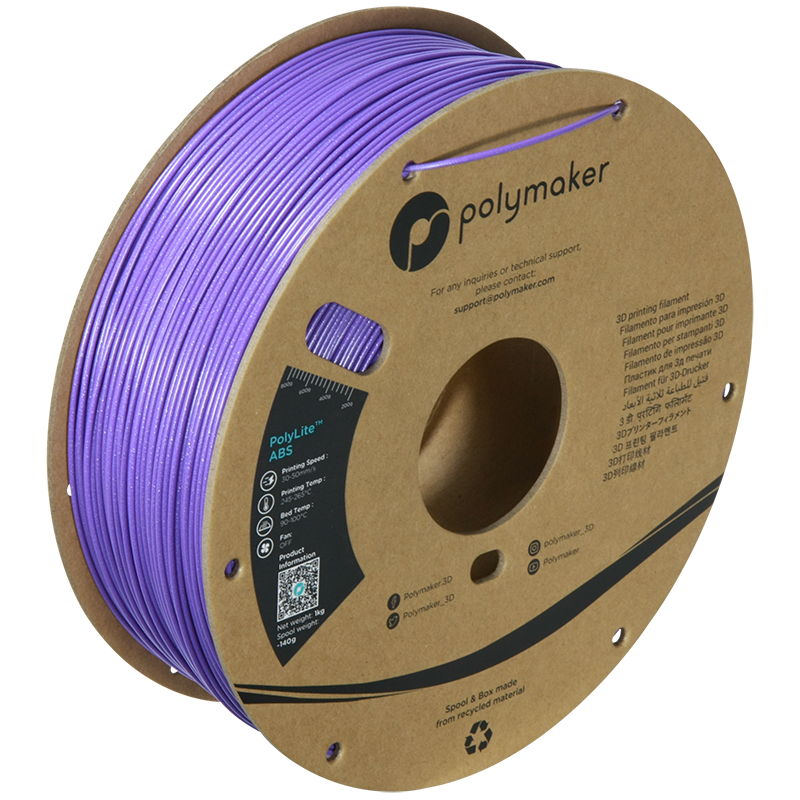
With the increasing demand for advanced manufacturing solutions, ABS 3D printer filament has become an important material for engineers, product designers, manufacturers, and 3D printing enthusiasts. It allows users to create functional components that can withstand regular handling, physical pressure, and exposure to moderately high temperatures. Compared with standard PLA filament, ABS generally provides better heat resistance and impact performance, making it suitable for more demanding projects.
Another reason behind the popularity of ABS plastic filament is its flexibility in different manufacturing applications. It can be used for rapid prototyping, customized mechanical components, protective enclosures, and replacement parts. Although ABS requires higher printing temperatures and careful temperature management, its strength, affordability, and post-processing capabilities make it a valuable option for both professional and personal 3D printing projects.
Features and Advantages of ABS 3D Printer Filament
One of the most important characteristics of ABS 3D printer filament is its excellent mechanical strength. It produces durable components that can handle everyday use, moderate impacts, and physical stress without breaking easily. This makes it suitable for functional prototypes, machine parts, mounting brackets, tool holders, and protective covers. Its toughness allows printed objects to maintain their structural integrity in applications where basic printing materials may not provide sufficient durability.
Heat resistance is another major advantage of ABS filament. Unlike ordinary PLA, which can soften when exposed to relatively low temperatures, ABS generally maintains its shape under higher-temperature conditions. Its glass transition temperature is approximately 105°C, although actual performance depends on the formulation and manufacturing specifications. This characteristic makes ABS suitable for automotive accessories, electrical housings, appliance components, and industrial applications that require improved thermal performance.
Impact resistance also contributes to the popularity of ABS 3D printing material. Its ability to absorb physical force makes it useful for manufacturing components that experience regular handling or occasional impacts. The material offers a practical balance between rigidity and flexibility, allowing designers to produce functional objects that are strong without being excessively brittle.
Another useful benefit is its excellent post-processing potential. ABS printed parts can be sanded, drilled, cut, and machined to achieve specific dimensions and surface finishes. Acetone vapor smoothing is also commonly used to reduce visible printing layers and create a smoother surface. This finishing technique can improve the appearance of prototypes and customized products, although acetone requires careful handling because it is highly flammable and produces hazardous vapors.
ABS 3D printer filament is available in different colors, sizes, and material formulations. Common filament diameters include 1.75mm and 2.85mm, depending on printer compatibility. Popular colors include black, white, grey, red, and blue, while specialty manufacturers also offer modified ABS blends designed for particular performance requirements. These options provide flexibility for users working on different functional and creative projects.
ABS 3D Printing Settings and Industrial Applications
Achieving high-quality results with ABS 3D printer filament requires appropriate printer settings and a stable printing environment. Unlike PLA, ABS is more sensitive to cooling and temperature fluctuations. Most standard ABS filaments require a nozzle temperature between 220°C and 250°C, depending on the manufacturer's recommendations and material formulation.
A heated print bed is generally necessary to improve first-layer adhesion and reduce warping. Bed temperatures commonly range between 90°C and 110°C. Maintaining a consistent bed temperature helps prevent uneven shrinkage and reduces the possibility of printed corners lifting from the build surface.
An enclosed 3D printer is highly recommended for ABS printing. An enclosure helps maintain a stable temperature around the printed object and minimizes the effects of cold air and sudden cooling. This is especially important when producing larger models because uneven temperature changes can cause cracking, warping, and poor layer adhesion.
Cooling settings also play an important role in print quality. Excessive cooling can increase material shrinkage and weaken the connection between printed layers. For this reason, ABS is commonly printed with reduced part cooling compared with PLA. Adjusting fan speed, printing temperature, and enclosure conditions according to the filament manufacturer's instructions can improve the final results.
Moisture management and ventilation should also be considered. ABS filament should be stored in a dry environment to maintain consistent extrusion quality. Heating ABS can release volatile compounds and ultrafine particles, so printing in a poorly ventilated room is not recommended. Appropriate ventilation and suitable filtration can help create a safer working environment.
ABS 3D printer filament is widely used in the automotive industry for manufacturing dashboard prototypes, interior accessories, mounting brackets, clips, and customized vehicle components. Its impact resistance and heat tolerance make it suitable for various functional automotive applications.
The electronics industry also benefits from ABS material. It is commonly used for electronic enclosures, protective housings, equipment covers, and control panels. Its electrical insulating characteristics and mechanical durability make it useful for producing protective components for electronic devices.
In industrial manufacturing, ABS filament supports rapid prototyping and customized production.
Engineers can create physical models, test mechanical designs, evaluate component dimensions, and identify improvements before investing in large-scale manufacturing. This approach helps reduce product development costs and improves design efficiency.
For home and DIY applications, ABS can be used to produce replacement components, tool organizers, storage accessories, brackets, and customized household products. Its combination of strength and versatility makes it suitable for practical objects designed for regular use.
ABS Filament Comparison and Material Selection
Choosing the right 3D printing material depends on the requirements of a particular project. ABS, PLA, PETG, and nylon are popular thermoplastic filaments, but each offers different mechanical and thermal characteristics.
PLA filament is commonly recommended for beginners because it is easy to print and produces attractive surface details. It usually requires lower nozzle temperatures and experiences less warping than ABS. However, PLA has lower heat resistance, making ABS a better choice for many functional components exposed to higher temperatures.
PETG filament offers a useful combination of strength, flexibility, and relatively straightforward printing. It generally experiences less shrinkage than ABS and is suitable for protective covers, containers, and functional accessories. However, ABS may be preferable for applications requiring particular heat resistance and acetone-based surface finishing.
Nylon filament is known for its excellent toughness, flexibility, and wear resistance. It is frequently used for gears, mechanical components, and parts exposed to repeated movement. However, nylon absorbs moisture easily and requires appropriate storage and drying conditions to maintain printing quality.
When selecting ABS 3D printer filament, users should consider material quality, dimensional accuracy, printer compatibility, and manufacturer specifications. Consistent filament diameter helps maintain smooth extrusion and reduces the possibility of printing defects. It is also important to confirm that the printer supports the required nozzle temperature and heated bed conditions.
Proper storage is equally important for maintaining filament quality. Keeping ABS spools in airtight containers with desiccants helps protect them from environmental moisture and dust. Following recommended storage conditions can support consistent extrusion and improve overall printing performance.
Conclusion
abs 3d printer filament remains one of the most reliable materials for manufacturing strong, durable, impact-resistant, and heat-resistant 3D printed components. Its excellent mechanical properties and versatile applications make it suitable for automotive accessories, electronic enclosures, industrial equipment, functional prototypes, and customized household products.
Although ABS printing requires higher temperatures, a heated bed, proper ventilation, and careful temperature management, these requirements can be handled with suitable equipment and appropriate printing techniques. Using an enclosed 3D printer, maintaining stable printing conditions, and selecting high-quality ABS filament can significantly reduce common problems such as warping and poor layer adhesion.