






Is Cryotherapy the Best "No-Needle" Option for You?
For many patients, the primary deterrent to mole removal in Dubai isn't the procedure itself, but the fear of local anesthetic needles. Cryotherapy presents a compelling alternative for specific types of lesions. By utilizing extreme cold—typically liquid nitrogen—practitioners can "freeze" the mole cells, causing them to naturally slough off over time. This method is often favored for its simplicity and the absence of traditional surgical tools. In a clinical setting, we find that cryotherapy is an excellent fit for surface-level benign moles and skin tags, offering a pathway to clear skin that feels less like a "surgery" and more like a routine skin treatment.
The Clinical Mechanism of Freezing
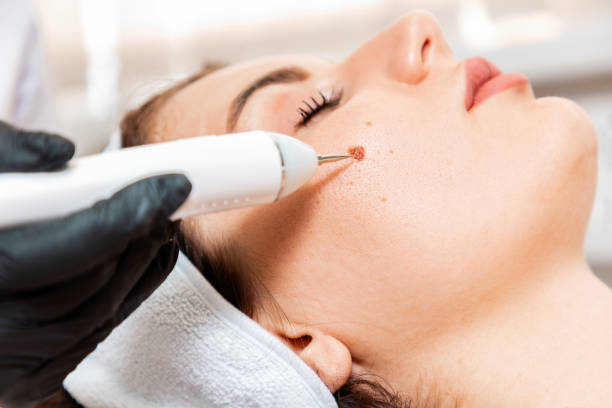
Cryotherapy works on the principle of thermal shock. When the specialized cryo-probe or spray is applied, it creates intracellular ice crystals that disrupt the structure of the mole. This process cuts off the blood supply to the lesion without damaging the deep dermal layers. Within a few days, the frozen tissue becomes a dark crust, acting as a natural protective barrier while the new, healthy skin forms underneath. Because the cold itself acts as a mild desensitizer, many patients undergo this treatment without any supplemental numbing.
How Cryotherapy Compares to Heat-Based Methods
Understanding the "Cold vs. Heat" debate is essential for choosing the right outpatient procedure.
| Feature | Cryotherapy (Cold) | CO2 Laser (Heat) | Radiofrequency (RF) |
| Anesthetic Needed | Usually No | Yes (Local) | Yes (Local) |
| Tissue Impact | Freezes/Sloughs | Vaporizes | Cauterizes |
| Best For | Thin, surface moles | Deep, dark moles | Raised, fleshy moles |
| Procedure Time | 2–5 Minutes | 5–10 Minutes | 5–15 Minutes |
| Initial Result | Blister/Darkening | Shallow "Graze" | Flat surface |
What Does the "Freezing" Sensation Actually Feel Like?
In clinical practice, patients often describe the sensation as a localized "stinging" or "biting" cold, followed by a brief period of numbness. Unlike the sharp pinch of a needle, the sensation is gradual. During the 30 to 60 seconds of application, you might feel a dull ache, but this dissipates almost immediately once the probe is removed.
Based on post-procedure follow-ups, the "thawing" process is when most patients feel a slight throbbing, similar to the feeling of skin after holding an ice cube for too long. However, this is universally described as tolerable and "easy" compared to more invasive methods.
"I've always been needle-phobic. The cryotherapy was so fast—just a few seconds of a cold sting and it was done. No needles, no blood, just a small spot that healed in a week." — Faisal
The Unique Healing Journey of Cryotherapy
The recovery for cryotherapy looks different than laser or RF, as the "removal" happens gradually over several days.
-
Hours 1–24 (The Blister Phase): The area may become slightly red or develop a small, clear blister. This is a sign that the freezing reached the appropriate depth.
-
Days 3–7 (The Darkening Phase): The mole will turn darker and flatter. It may look more prominent during this stage, but this is simply the dead tissue preparing to shed.
-
Week 2 (The Shedding Phase): The darkened spot naturally falls off, usually during a shower or while washing.
-
Week 3+ (The Remodeling Phase): A pink spot remains, which gradually fades. Because no "hole" was made in the skin, the risk of an indented scar is exceptionally low.
Why a Diagnostic Evaluation is Mandatory
Before any freezing begins, a thorough diagnostic assessment is performed. Cryotherapy is a "destructive" technique, meaning the tissue cannot be sent for a biopsy once frozen. Therefore, it is clinically vital to ensure the mole is 100% benign. We use dermatoscopy to confirm there are no suspicious pigment patterns. If a mole is deeply rooted or shows irregular features, we may steer you toward a shave excision instead, ensuring your long-term health is the priority over procedural convenience.
Who is the Ideal Candidate for Cryotherapy?
Cryotherapy is highly effective, but it requires the right "target." You are a good candidate if:
-
You have thin, flat moles or skin tags.
-
You have a strong aversion to needles or local anesthesia.
-
You are looking for a fast, bloodless procedure.
-
You are prepared for a two-week window for the mole to fall off naturally.
Clinical Advice for Post-Cryo Care
To ensure the best aesthetic result, specifically in the Dubai environment, keep these points in mind:
-
Leave the Blister Alone: If a small blister forms, do not pop it. It is sterile and provides the perfect environment for the new skin to grow.
-
Moisture is Key: Applying a simple, fragrance-free ointment after the spot darkens can help the edges lift more cleanly, preventing any "tearing" of the skin.
-
UV Shielding: The pink skin revealed after shedding is very "young." Protect it with a zinc-based sunblock to prevent post-inflammatory darkening.
"I had a few small moles on my neck that I hated. Cryotherapy cleared them all up without any fuss. The little dark spots they turned into were gone in ten days." — Maya
Why Choose Tajmeels Clinic for Your Procedure?
At Tajmeels Clinic, we believe in providing a range of options that cater to every patient’s comfort level. We specialize in mole removal in Dubai by integrating medical-first diagnostics with versatile treatment paths like advanced cryotherapy. Our clinicians are experts at determining which moles will respond best to freezing, ensuring a safe, effective, and "needle-free" experience whenever possible. We are dedicated to transparent communication and professional care, helping you achieve your skin goals with the highest standards of safety and aesthetic precision.
Frequently Asked Questions
Will cryotherapy leave a white spot?
In some skin types, the extreme cold can temporarily affect the pigment-producing cells, leading to a lighter spot (hypopigmentation). This is usually temporary and blends in over several months as the skin matures.
Can I go back to work immediately?
Yes. There is absolutely no downtime. The treated area might be slightly red for an hour, but it does not require a bulky bandage, making it a very discrete outpatient option.
Is one "freeze" session enough?
For most surface moles, a single session is sufficient. If a mole is slightly thicker, a "double-freeze" cycle within the same appointment or a quick follow-up session may be recommended for a complete result.
Does cryotherapy cause scarring?
When performed by a professional who controls the "freeze time" accurately, the risk of scarring is very low. Because the treatment is non-invasive and doesn't cut the skin, the architectural integrity of the area remains intact.
Can I exercise after cryotherapy?
Yes, you can resume normal activities immediately. Unlike laser treatments that might involve a raw wound, cryotherapy keeps the skin surface "closed" during the initial healing days, making it very resilient to sweat and movement.