






The comparison of 4140 vs 4130 steel is one of the most common topics in metallurgy, engineering, and manufacturing industries. Both are chromium-molybdenum alloy steels widely used in automotive, aerospace, oil and gas, and heavy machinery applications. Although they belong to the same family of low-alloy steels, their performance, strength, and applications differ significantly.
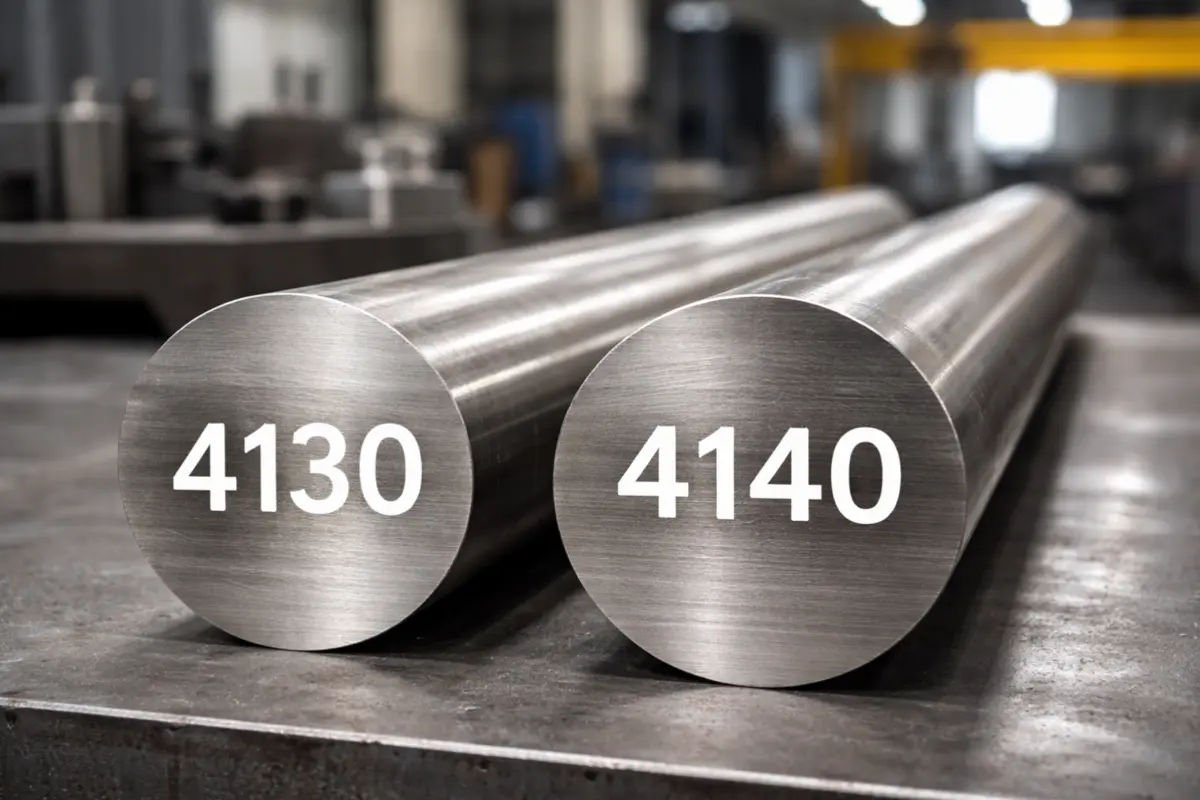
Understanding the difference between 4140 and 4130 steel is important for engineers, machinists, and buyers who want to choose the right material for durability, cost efficiency, and performance. In this guide, we will explore their properties, uses, advantages, and real-world applications in detail to help you make the right decision.
What is 4140 vs 4130 Steel?
4140 vs 4130 steel are both chromium-molybdenum alloy steels, commonly referred to as “chromoly steel.” They are known for their excellent strength, toughness, and wear resistance.
4130 steel contains lower carbon content compared to 4140, which makes it easier to weld and machine. It is widely used in applications where weight reduction and moderate strength are required, such as aircraft structures, bicycle frames, and automotive racing components.
On the other hand, 4140 steel contains higher carbon content, giving it significantly higher strength and hardness. This makes it suitable for heavy-duty applications such as gears, crankshafts, axles, and industrial machinery parts.
Both steels are heat-treatable, meaning their mechanical properties can be improved through processes like quenching and tempering. However, the choice between them depends on the required balance between strength, flexibility, and machinability.
Chemical Composition and Material Properties
The main difference between 4140 vs 4130 steel lies in their chemical composition. Both contain chromium and molybdenum, which enhance hardness, corrosion resistance, and strength.
4130 steel typically contains lower carbon content, which improves ductility and weldability. This makes it easier to shape and form without cracking. It is often chosen for lightweight structures where flexibility is important.
4140 steel has a higher carbon percentage, which increases hardness and tensile strength. This added strength makes it more resistant to wear and deformation under heavy loads. However, it is slightly more difficult to weld compared to 4130 steel.
In terms of mechanical properties, 4140 steel generally offers higher tensile strength and better fatigue resistance, while 4130 steel provides better machinability and weldability. These differences make each steel suitable for different engineering requirements.
Strength and Performance Comparison
When comparing 4140 vs 4130 steel, strength is one of the most important factors. 4140 steel is stronger due to its higher carbon content, making it ideal for applications that require high load-bearing capacity.
4130 steel, while slightly weaker, offers better flexibility and is less prone to cracking under stress. This makes it more suitable for dynamic structures where flexibility is more important than extreme strength.
In terms of performance, 4140 steel performs better in high-stress environments such as industrial machinery, while 4130 steel is preferred in aerospace and automotive racing due to its lightweight properties.
Both steels can be heat-treated to improve hardness and durability, but 4140 steel achieves higher hardness levels after treatment, making it more suitable for heavy-duty applications.
Machinability and Weldability
Machinability and weldability are crucial factors when selecting between 4140 vs 4130 steel.
4130 steel is known for its excellent weldability. It can be easily welded using standard welding techniques without requiring complex preheating procedures. This makes it highly popular in structural and fabrication industries.
4140 steel, however, requires more careful welding practices. Due to its higher carbon content, it may require preheating and post-weld heat treatment to avoid cracking. Despite this, it offers superior machinability when properly treated.
In machining operations, 4130 steel is easier to cut and shape, while 4140 steel may require stronger tools due to its hardness. Manufacturers often choose based on production requirements and cost considerations.
Applications of 4140 and 4130 Steel
The applications of these two steels vary widely depending on their properties.
4130 steel is commonly used in aerospace structures, bicycle frames, roll cages, and lightweight automotive components. Its balance of strength and weight makes it ideal for performance-focused applications.
4140 steel is widely used in heavy machinery, industrial tools, shafts, gears, and automotive components that require high strength and durability. It is also used in oil and gas drilling equipment due to its toughness.
In engineering industries, the choice between these steels depends on whether the priority is weight reduction or maximum strength.
Heat Treatment and Hardening Process
Heat treatment plays a significant role in enhancing the properties of both steels. In the case of 4140 vs 4130 steel, heat treatment affects them differently.
4130 steel responds well to heat treatment but maintains its ductility even after hardening. This makes it suitable for applications requiring flexibility.
4140 steel, however, becomes extremely hard and strong after heat treatment. It is often quenched and tempered to achieve maximum strength and wear resistance.
The ability to customize mechanical properties through heat treatment is one of the reasons both steels are widely used in engineering applications.
Common Mistakes When Choosing Between 4140 vs 4130 Steel
One common mistake is assuming that stronger steel is always better. While 4140 steel is stronger, it is not always the best choice for every application. Using it where flexibility is needed can lead to unnecessary cost and difficulty in manufacturing.
Another mistake is ignoring weldability requirements. Many projects fail because 4140 steel is used without proper heat treatment during welding, leading to cracks and structural issues.
Choosing the right steel requires a clear understanding of the application, load conditions, and fabrication requirements.
Expert Tips for Selecting the Right Steel
Experts recommend analyzing the working environment before selecting between 4140 and 4130 steel. If weight reduction and ease of fabrication are priorities, 4130 steel is often the better choice.
For heavy-duty applications involving high stress and wear, 4140 steel is more suitable due to its superior strength.
It is also important to consider cost factors, as 4130 steel is generally more economical compared to 4140 steel in many applications.
4140 vs 4130 Steel in [LOCATION]
The demand for 4140 vs 4130 steel in [LOCATION] continues to grow across automotive, construction, and industrial sectors. Local manufacturers often choose between these steels based on availability, cost, and project requirements. Engineering companies in [LOCATION] rely on both materials for different applications, ensuring performance and durability standards are met.
Future Trends in Alloy Steel Usage
The future of alloy steels like 4140 and 4130 is closely tied to advancements in manufacturing technology. With the rise of automation, aerospace innovation, and lightweight engineering, demand for high-performance materials is increasing.
New heat treatment techniques and material processing methods are expected to further improve the strength-to-weight ratio of these steels, making them even more versatile in future applications.
Conclusion
The comparison of 4140 vs 4130 steel highlights the importance of choosing the right material based on specific engineering needs. While 4140 steel offers superior strength and hardness, 4130 steel provides better weldability and flexibility.
Both steels play a critical role in modern manufacturing and engineering industries. Understanding their differences helps in making informed decisions that improve performance, reduce costs, and ensure long-term durability.
Whether you are working in aerospace, automotive, or industrial manufacturing, selecting the right steel between 4140 and 4130 can significantly impact the success of your project.
Call to Action
If you are looking for expert guidance on selecting the right steel for your project, contact our engineering specialists today. We provide professional consultation, material selection support, and custom solutions tailored to your industry needs.
FAQs
What is the main difference between 4140 and 4130 steel?
The main difference is carbon content. 4140 has higher carbon, making it stronger, while 4130 is more flexible and easier to weld.
Is 4140 steel stronger than 4130 steel?
Yes, 4140 steel is stronger and harder due to its higher carbon content and heat treatment capability.
Which steel is easier to weld?
4130 steel is easier to weld compared to 4140 steel because of its lower carbon content.
Where is 4130 steel commonly used?
It is widely used in aerospace structures, bicycle frames, and automotive racing parts.
Where is 4140 steel commonly used?
It is used in heavy machinery, gears, shafts, and industrial tools requiring high strength and durability.
Click Here: https://rollyu.com/