


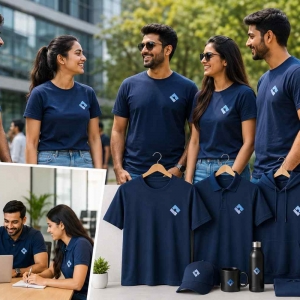




A design can look fantastic on a screen and disappointing on a T-shirt.
In many cases, the problem isn't the artwork.
It's the printing method.
The same design can produce completely different results depending on how it is printed. Some methods are better for bulk orders. Others are ideal for small quantities. Some work best on cotton, while others perform better on polyester and sportswear.
This is where many first-time buyers become confused.
They know what they want the T-shirt to look like, but they don't know which printing method will help them achieve that result.
The good news is that you don't need to become a printing expert to make a good decision.
Understanding a few key differences can help you choose the right option for your project and avoid unnecessary costs.
Why the Printing Method Matters More Than Most Buyers Think
Imagine two companies ordering the same design.
Both use identical artwork.
Both choose similar T-shirts.
Yet one receives vibrant, long-lasting prints while the other experiences cracking, fading, or poor detail.
The difference often comes down to the printing method selected during production.
Every printing technique has strengths and limitations.
The best choice depends on:
-
Fabric type
-
Quantity
-
Design complexity
-
Budget
-
Intended use
Instead of asking which method is best overall, it is better to ask:
Which method is best for my specific order?
DTF Printing: The Flexible Option for Modern Apparel
Direct-to-Film printing, commonly known as DTF, has become one of the most popular solutions in custom apparel.
Why?
Because it works well across different fabrics and allows detailed, colorful designs without requiring large order quantities.
DTF is commonly used for:
-
Startup merchandise
-
Event apparel
-
Personalized T-shirts
-
Small business branding
-
Team wear
One of the biggest advantages is flexibility.
Whether you need one piece or one hundred, DTF can often deliver consistent results.
It is especially useful for designs containing:
-
Multiple colors
-
Gradients
-
Detailed artwork
-
Complex graphics
For many modern apparel projects, DTF offers a balance between quality, versatility, and affordability.
Screen Printing: Still a Favorite for Large Orders
Long before digital printing became popular, screen printing dominated the custom apparel industry.
And despite newer technologies, it remains one of the most effective solutions for bulk orders.
Screen printing works particularly well when:
-
Quantities are high
-
Designs use limited colors
-
Consistency is important
This is why screen printing continues to be widely used for:
-
College festivals
-
Corporate events
-
Political campaigns
-
Team apparel
-
Promotional giveaways
The setup process requires more preparation, which is why it becomes more economical as quantities increase.
For larger projects, it often delivers excellent value.
DTG Printing: Ideal for Detailed Artwork
Direct-to-Garment printing takes a different approach.
Instead of transferring a design through film or screens, the printer applies ink directly to the garment.
The result can be impressive, especially for artwork containing:
-
Fine details
-
Photographic elements
-
Complex illustrations
-
Soft color transitions
DTG is commonly chosen for:
-
Artist merchandise
-
Premium apparel
-
Fashion brands
-
Limited-edition collections
One reason designers appreciate DTG is that it can reproduce intricate artwork that may be difficult to achieve using traditional methods.
However, garment selection becomes important because DTG typically performs best on cotton-based fabrics.
Embroidery: When Printing Isn't the Best Choice
Sometimes the best printing method isn't printing at all.
For professional branding, embroidery often creates a stronger impression.
Instead of applying ink to the garment, embroidery uses thread to stitch the design directly into the fabric.
This makes it popular for:
-
Corporate uniforms
-
Polo shirts
-
Hospitality apparel
-
Retail staff uniforms
-
Premium branding
An embroidered logo often feels more refined than a printed logo, especially in professional environments.
If the goal is creating a polished appearance, embroidery deserves serious consideration.
Heat Transfer Printing: Useful for Personalized Projects
Heat transfer printing is frequently used when individual customization is required.
This includes:
-
Player names
-
Jersey numbers
-
Event personalization
-
Small production runs
Because each item can be customized individually, it offers flexibility for projects where every garment may need unique information.
However, the suitability depends on the design and intended use.
For long-term branded apparel, other methods may provide better durability.
Sublimation Printing: Designed for Polyester Apparel
Sublimation is commonly associated with sportswear and performance garments.
Unlike other printing methods, sublimation becomes part of the fabric rather than sitting on top of it.
This makes it particularly effective for:
-
Sports jerseys
-
Running events
-
Cycling apparel
-
Performance wear
Because the design becomes embedded within the material, the print remains lightweight and comfortable.
The primary limitation is that sublimation works best on polyester garments.
Which Method Works Best for Small Orders?
Small orders present a different challenge.
Traditional setup costs become harder to justify when only a few garments are required.
For lower quantities, businesses often choose:
-
DTF Printing
-
DTG Printing
-
Heat Transfer
These methods allow customization without requiring large production runs.
This makes them suitable for:
-
Startups
-
Personal projects
-
Prototype merchandise
-
Limited-edition apparel
Which Method Works Best for Bulk Orders?
When quantities increase, production efficiency becomes more important.
For larger projects, businesses often consider:
-
Screen Printing
-
DTF Printing
-
Embroidery (for uniforms)
The right choice depends on both quantity and design complexity.
A simple logo order may benefit from a completely different process than a full-color graphic campaign.
Common Mistakes Buyers Make
Many apparel orders run into problems because the printing method was selected incorrectly.
Some common mistakes include:
Choosing Based Only on Price
The cheapest method isn't always the best option.
Ignoring Fabric Compatibility
Not every method works equally well on every fabric.
Using Bulk Methods for Small Orders
Large-scale production techniques may not be practical for limited quantities.
Overlooking Durability Requirements
A one-day event and a daily uniform have very different durability needs.
Assuming Every Supplier Offers Every Method
Not all providers specialize in the same production techniques.
Understanding these differences can prevent expensive mistakes.
How Professionals Choose a Printing Method
Experienced apparel buyers rarely start by asking:
"Which printing method is best?"
Instead, they ask:
-
What fabric am I using?
-
How many pieces do I need?
-
How detailed is the design?
-
How often will the garment be worn?
-
What is my budget?
The answers naturally point toward the most suitable option.
This is why the same supplier may recommend different methods for different projects.
The goal is not promoting a particular technology.
The goal is producing the best final garment.
Final Thoughts
There is no single printing method that works perfectly for every custom apparel project.
The best choice depends on the garment, design, quantity, and intended use.
DTF offers flexibility for many modern projects. Screen printing remains strong for bulk production. DTG excels with detailed artwork. Embroidery creates a premium appearance. Sublimation dominates sportswear.
Instead of choosing a method based on trends or assumptions, focus on what your project actually requires.
When the printing method matches the garment and design, the final product almost always performs better.
And that is what matters most.
FAQs
What is the best custom T shirt printing method?
There is no universal best option. The right method depends on fabric, design complexity, quantity, and budget.
Is DTF better than screen printing?
DTF is often more flexible for smaller quantities and colorful designs, while screen printing can be more economical for large orders.
Which printing method lasts the longest?
Durability depends on garment quality, printing quality, and care instructions. Screen printing, embroidery, and high-quality DTF prints can all offer excellent longevity.
What printing method is best for company uniforms?
Embroidery is commonly chosen for professional uniforms, especially on polo shirts and workwear.
Is DTG suitable for bulk orders?
DTG is often preferred for detailed designs and smaller production runs rather than very large quantities.
Which printing method is best for sports jerseys?
Sublimation is widely used for polyester sportswear because it produces lightweight, durable prints.