





A startup founder is preparing for the company’s first business expo. The social media posts are ready, the booth design is almost done, and the brochures are printed. But one question still remains: how will people remember the brand after they walk away?
This is where a simple Custom T-Shirt can do more than most businesses expect. When your team wears the same branded apparel, your company looks organized, approachable, and easier to remember.
Social media is important, but brand recognition cannot depend on screens alone. People remember brands they see repeatedly in real situations — at events, offices, deliveries, meetings, campuses, and customer interactions.
Why do some brands stay memorable even without spending more on ads?
Memorable brands are not always the ones with the biggest ad budgets. They are the ones that show up consistently.
A company logo on a T-shirt, polo, hoodie, water bottle, or employee uniform creates repeated exposure. Unlike a social media post that disappears in seconds, branded apparel keeps working wherever the wearer goes.
For example, a sales team attending a trade show in matching custom T-shirts is easier to identify. A college event team wearing coordinated apparel looks more professional. A startup team in branded polos creates trust before the first conversation even begins.
The mistake many businesses make is treating apparel as a one-time event item. In reality, good custom apparel becomes part of long-term workplace branding.
How do employees become walking brand ambassadors?
Employees represent your brand long before they speak. Their clothing, confidence, and presentation influence how customers see the business.
A well-designed Custom T-Shirt helps employees feel part of something bigger. It creates team identity, especially during onboarding, events, office celebrations, product launches, and customer-facing activities.
But the design must feel wearable. If the fabric is uncomfortable, the fit is poor, or the logo placement feels awkward, employees may avoid wearing it.
Choose breathable cotton for everyday office use, dry-fit fabric for sports or outdoor events, and premium polos for client-facing teams. The goal is not just visibility. The goal is pride.
Why does branded apparel work better when it looks intentional?
People notice details. A clean chest logo, consistent brand colours, proper sizing, and good finishing can make a business look more reliable.
Random apparel choices can weaken brand recall. For example, using different shades of the same logo colour across every batch makes the brand look inconsistent. Oversized logos can feel cheap. Poor print quality can damage trust.
Before ordering, businesses should check:
Logo size
Logo placement
Fabric GSM
Colour consistency
Print or embroidery method
Sizing options
Wash durability
Delivery timeline
A small sample before a bulk order can prevent costly mistakes.
What should businesses check before ordering custom T-shirts?
The first question should not be “How cheap can we make it?” It should be “Where will people wear this?”
For office use, soft cotton or poly-cotton works well. For outdoor campaigns, dry-fit fabric is practical. For premium corporate branding, custom polos or embroidered apparel may create a stronger impression.
GSM matters too. A very thin T-shirt may not last well after repeated washing. A very heavy T-shirt may feel uncomfortable in Indian weather.
Fit is another important factor. Regular fit works for most teams. Oversized fits suit youth-focused brands, colleges, creators, and casual events. Performance fits work better for sports teams and active staff.
How do printing methods affect brand perception?
The branding method should match the purpose of the apparel.
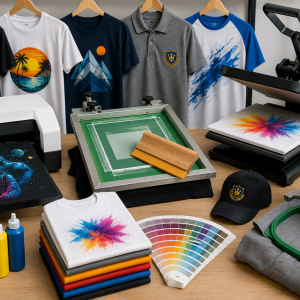
DTF printing is useful for colourful designs, logos, and small-to-medium orders. DTG works well for detailed artwork on cotton garments. Screen printing is practical for larger quantities with simple designs. Embroidery gives a premium look for polos, uniforms, caps, and corporate apparel.
For a Custom T-Shirt used in events, DTF or screen printing can work well. For executive polos, embroidery may feel more professional.
The mistake is choosing the method only by price. The right method depends on fabric, quantity, design complexity, usage, and expected durability.
Where should the logo be placed for better brand recall?
Logo placement affects how people notice your brand.
A left chest logo looks professional and subtle. A sleeve logo adds a premium branded detail. A back print works well for events, campaigns, delivery teams, and volunteers. Large front artwork suits startup culture, student events, and promotional drops.
For corporate uniforms, keep the design clean. For events, make it more visible. For employee welcome kits, balance brand identity with wearability.
The best branded apparel is something people want to wear again.
How can custom apparel support events, gifting, and onboarding?
Social media creates awareness, but physical brand touchpoints create memory.
A new employee receiving a welcome kit with a branded T-shirt, notebook, bottle, and hoodie feels included from day one. An event attendee receiving a wearable T-shirt is more likely to remember the brand than someone who only saw a banner.
Corporate gifting also becomes more valuable when the products are useful. Apparel, drinkware, and office merchandise can stay with customers for months.
This is where Yoode helps businesses think beyond just printing a logo. The focus should be on choosing products that fit the audience, purpose, and brand personality.
What mistakes reduce the value of branded apparel?
Many companies lose value because they rush the order.
Common mistakes include using low-resolution logos, choosing the wrong fabric, skipping size planning, ignoring brand colours, selecting poor placement, ordering without a sample, and waiting until the last minute.
Procurement teams should also consider lead time. Bulk apparel orders need time for design approval, production, quality checks, packing, and delivery.
A clear brief helps avoid confusion. Share the logo file, quantity, sizes, preferred fabric, event date, print method, and delivery location before production begins.
How can businesses build brand recognition beyond social media?
Start by identifying where people meet your brand offline.
This could be your office, store, event booth, school campus, delivery route, sales meeting, onboarding session, or customer gifting moment.
Then choose branded products that match that environment. Custom T-shirts may work best for events and teams. Custom polos may suit corporate staff. Hoodies and sweatshirts work well for employee engagement and winter gifting. Bottles, mugs, and notebooks are useful for daily brand recall.
Brand recognition grows when every touchpoint feels connected.
The practical next step for your brand
You do not need a huge marketing budget to become memorable. You need consistency, usefulness, and quality.
A well-made Custom T-Shirt can introduce your brand in places social media cannot reach. When paired with thoughtful design, good fabric, correct logo placement, and reliable production, it becomes part of your brand experience.
For businesses planning employee uniforms, event T-shirts, onboarding kits, promotional apparel, or corporate merchandise, Yoode can help turn a logo or idea into practical branded products your team and customers will actually use.
Key Takeaways
Brand recognition should not depend only on social media.
Custom T-shirts help businesses create real-world visibility.
Good fabric, fit, print quality, and logo placement affect brand trust.
Employees are more likely to wear branded apparel when it feels comfortable and well-designed.
Bulk orders should include sampling, sizing, lead time planning, and quality checks.
Yoode can support businesses with custom apparel, uniforms, merchandise, and corporate gifting in India.