










Starting a new website project often brings a flood of unsolicited suggestions. Everybody seems to have a rule about colors, layouts, or features. Some of this input comes from legitimate experience. A surprising amount comes from habits that no longer match how the internet actually works.
Technology changes constantly. User expectations shift with each new device and platform. Yet many old assumptions survive well past their useful date. These misconceptions lead to wasted effort, unnecessary costs, and dissatisfied site visitors. Let us review five common myths. The following explanations come directly from professionals who build and maintain sites every day.
Myth 1: A Website Requires No Attention After Launch
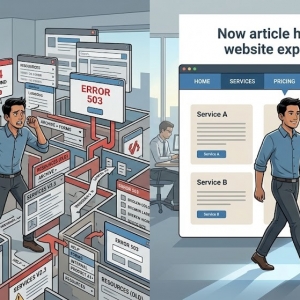
Some owners treat their website as a finished artifact. They compare it to a business card or a printed menu. Once printed, it stays the same forever. That analogy does not hold for digital properties. A website interacts with external systems, users, and security threats constantly.
After going live, your site enters a state of continuous change. Software updates occur regularly. Hosting environments upgrade. Attackers develop new methods to exploit weaknesses. If you leave your site untouched for an extended period, it will eventually encounter problems. Pages may display incorrectly. Critical functions may stop responding. Security gaps may appear. An experienced website designer will caution against this hands-off approach. They have rescued many sites that deteriorated due to neglect.
Routine maintenance prevents these failures. Applying security patches, updating plugins, and verifying backup integrity are standard practices. Consider your site like a heating system in a home. It runs quietly in the background, but it needs annual inspections and filter changes. Skip those tasks, and you risk a breakdown during the coldest month. Your website works the same way. Regular care keeps it dependable.
Myth 2: All Resources Should Go Into the Homepage
Older web strategies prioritized the homepage as the sole entry point. Visitors typed the main address, saw the front page, and clicked inward. That model has become obsolete. Most users now arrive through direct links from search engines, newsletters, or social platforms.
These visitors land on specific articles, product listings, or category pages. They may never see your homepage. If those interior pages lack clear navigation or compelling design, the user leaves immediately. They do not search for the homepage to fix their confusion. Every page acts as a potential starting point for the user journey.
A reputable web design company evaluates the entire site structure. They ensure that product pages, blog posts, and contact forms all meet the same usability standards. Navigation elements should appear consistently. Calls to action must be visible from every template. Load times should be uniform across all sections. Treating interior pages as secondary is a costly error.
Myth 3: Design Is Primarily About Aesthetics
Good looks matter. A visually pleasing site creates a positive first impression. It signals care and professionalism. However, reducing design to mere decoration misses the broader purpose. A site can look stunning and still fail to help users accomplish their tasks.
Design serves a functional role. It organizes information. It highlights important actions. It reduces the cognitive effort required to navigate. Font choices affect reading speed. Color contrasts influence visibility. White space directs attention. When these elements align, users move through the site with ease. When they clash, users become frustrated and leave.
Industry practitioners focus on user experience, or UX, as a core measure of success. They observe how people interact with layouts. They identify pain points and adjust accordingly. A beautiful page that confuses visitors is a failed design. Functionality must come first. Appearance supports that functionality, but it does not replace it.
Myth 4: More Elements Mean More Engagement
There is a natural tendency to want a website that looks busy and exciting. Designers frequently hear requests for video backgrounds, rotating sliders, animated icons, and layered pop-ups. These additions seem like they will impress visitors and boost interaction. They often produce the opposite result.
Each added component increases the total file size. Larger files take longer to download. Slow page speeds frustrate users and drive them away. Mobile visitors face even greater challenges. A complex animation that performs well on a desktop may stutter or freeze on a smartphone. That freezing creates a poor experience and damages trust.
Excessive features also distract from primary goals. A user trying to complete a checkout process does not need an animated banner pulling their attention elsewhere. A skilled website designer typically recommends restraint. They understand that clean, fast pages convert better than cluttered, slow ones. Every element must justify its presence by serving a clear function.
Myth 5: SEO Is a Setup Task
Search engine optimization is sometimes treated as an initial configuration job. You insert keywords, write meta tags, and submit your sitemap. After that, you assume your rankings are secure. This assumption ignores how search platforms actually work.
Algorithms update frequently. They prioritize sites that show regular activity and fresh content. They also track user signals. If people click your result and quickly return to the search page, the algorithm interprets that as a poor match. Your position declines accordingly. Even if your initial optimization was strong, it will lose effectiveness over time.
Ongoing SEO includes publishing new articles, revising older content, and monitoring broken links. Technical aspects like page speed and SSL certificates also influence visibility. A consistent maintenance schedule keeps your site competitive. Treating SEO as a one-off project ensures that your visibility will erode slowly but steadily.
Base Your Decisions on Current Knowledge
A website involves significant investment. Misguided beliefs can reduce that investment's return. By discarding these five myths, you can focus on approaches that deliver real outcomes.
Avoid treating your site as a static object. Design every page with equal attention. Keep features lean and purposeful. Commit to ongoing SEO efforts. When you choose a web design company, ask how they handle maintenance and user testing. Their professional insight will help you avoid common traps. They have seen these mistakes repeatedly, and they know the remedies.