



Asking "how much do custom rigid boxes cost" is a bit like asking how much a custom-built piece of furniture costs, the honest answer is that it depends entirely on the specifications, and a generic number would be more misleading than helpful.
What we can offer instead is a clear breakdown of the specific factors that drive pricing, so you can plan your budget and specify your order with a realistic sense of the trade-offs involved.
Board Weight and Thickness
Chipboard thickness is one of the largest cost drivers in rigid box production. Lighter board, around 1.5mm, costs meaningfully less than heavier 2.5mm to 3mm stock, both in raw material and in the labor required to wrap and assemble it.
Before requesting a quote, it's worth deciding how much structural weight your product genuinely needs rather than defaulting to the heaviest option available; a lighter product like jewelry rarely benefits from the heaviest board weight, while premium spirits or electronics often do.
Box Style and Construction Complexity
A simple two-piece box, base and lid, is generally the most cost-efficient rigid construction. Magnetic closure boxes, book-style hinged boxes, and boxes with custom die-cut inserts each add assembly steps and material, which increases per-unit cost accordingly.
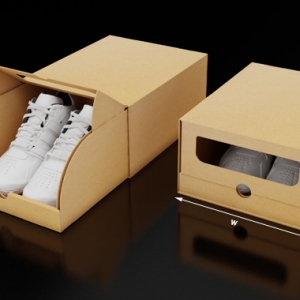
Collapsible rigid boxes sit in an interesting middle position: they typically cost somewhat more per unit than a standard two-piece box due to the additional engineering required, but they can reduce shipping and storage costs enough to offset that difference for some order volumes.
Print and Finish Treatments
The wrap paper's print complexity, and any finish applied over it, meaningfully affects total cost. Full-color CMYK printing costs more than spot-color printing. Finishes like soft-touch laminate, foil stamping, embossing, and spot UV each add a separate production step and cost line.
It's worth being deliberate here: a single, well-executed finish, foil stamping on a logo, for instance, often creates more perceived value than stacking three or four finishes on the same box, and it keeps your cost per unit more predictable.
Order Volume
Rigid box production has meaningful fixed costs, tooling, die-cutting setup, and print plate preparation, that get distributed across the total order quantity. This means per-unit cost drops considerably as volume increases, particularly between very small runs and mid-volume runs.
Alpha Global Packaging's minimum order quantity is 100 units, which allows smaller brands to access custom rigid packaging without committing to the kind of volume that was historically required to justify custom tooling costs.
Turnaround Time
Standard production turnaround typically runs 12 to 14 business days from final design approval. Rush production, when tooling and material availability allow it, is generally available in 7 to 8 business days at a premium, usually in the range of a 25% surcharge over standard pricing.
If your timeline has flexibility, standard turnaround is almost always the more cost-efficient choice; rush fees exist because expedited production requires reprioritizing equipment and labor that would otherwise be running other orders.
Inserts and Secondary Components
Custom-fitted foam, cardboard, or fabric inserts add both material and labor cost, but they also protect the product and elevate the unboxing experience considerably, particularly for fragile or high-value items.
If your product doesn't require structural protection during shipping, a simpler tissue or printed paper insert can deliver much of the visual impact of a custom-fitted insert at a lower cost, which is worth discussing with your supplier before defaulting to the most elaborate option.
Sample and Prototype Costs
Before committing to a full production run, most brands request a physical sample or a 3D mockup, and it's worth understanding how these fit into the overall cost picture. A 3D digital mockup is typically offered at no charge, since it requires no physical material or tooling, and it's the fastest way to evaluate a design before committing further.
A physical pre-production sample, using actual board and finish materials, typically does carry a cost, since it requires at least a partial production setup, but it's a worthwhile expense for any order where getting the specification exactly right matters more than saving a modest sample fee.