


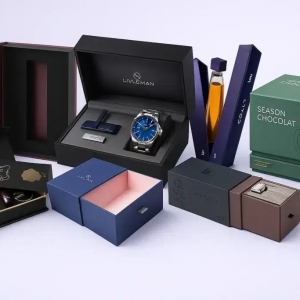


Specifying rigid shoe boxes for the first time can be confusing, because the same word "rigid" gets used to describe boxes that vary enormously in board weight, construction, and finish. Understanding what actually goes into a rigid shoe box makes it much easier to compare supplier quotes and avoid paying premium prices for mid-tier construction.
This breakdown covers the four variables that determine both the feel and the cost of a rigid shoe box: board weight, lid style, interior treatment, and finish.
Suppliers don't always volunteer this level of detail unless asked directly, which is why brands comparing quotes should request a written specification sheet rather than relying on a verbal description of "premium" or "rigid" quality.
Greyboard Weight and Wall Thickness Explained
Rigid boxes are built around greyboard, measured either in GSM or caliper (thickness in points or millimeters). For footwear, board in the 1,800–2,500 GSM range is typical, with heavier board used for the base and slightly lighter board for the lid to keep total box weight manageable for shipping.
Thicker board isn't automatically better, it adds cost and freight weight without necessarily adding durability if the corner construction is weak. A well-specified mid-weight board with strong corner wrapping will often outperform a heavier board that's assembled poorly.
Lid Styles - Full Telescoping, Shoulder Neck, and Drawer Boxes
Full telescoping lids cover the entire base and are the most common style for shoe boxes because they protect the product from dust and light on all sides. Shoulder-neck lids sit on a narrower lip and expose a small band of the base, which some brands use as a secondary branding surface.
Drawer-style boxes, where the base slides out from a sleeve, are less common for footwear because they don't lift open with the same ceremony, but they're gaining traction for slimmer silhouettes like slides and sandals where a lid isn't structurally necessary.
Interior Considerations: Inserts, Tissue, and Shoe Cradles
The inside of the box matters as much as the outside for perceived quality. Foam or board cradles keep the shoe from shifting during transit, printed tissue reinforces branding at the moment of opening, and some brands add a printed interior lid panel that's only visible once the box is opened, a detail that costs little but reads as thoughtful design.
Finish Options - Matte Lamination, Spot UV, Foil Stamping
Matte lamination is the baseline finish for most rigid shoe boxes because it resists fingerprints and scuffing better than gloss. Spot UV adds a glossy, raised texture over specific design elements like a logo, and foil stamping, gold, silver, or holographic, adds a metallic accent that reads as premium under both retail and studio lighting.
Combining two finishes, such as matte lamination with a foil-stamped logo, is the most common approach for designer shoe boxes because it balances cost against visual impact.
How to Read a Rigid Box Supplier Quote Line by Line
A quote for rigid shoe boxes typically bundles several cost components into a single per-unit price, which makes it hard to compare two supplier bids that look similar on the surface but differ substantially underneath. Board weight and caliper should be listed explicitly, not just described as "heavy-duty" or "premium," since those terms carry no standardized meaning across suppliers.
Beyond board weight, ask for a breakdown of tooling and plate costs separately from per-unit production cost, since tooling is a one-time expense that gets amortized differently depending on order volume. Finish costs, lamination, foil stamping, spot UV, should also be itemized individually so that a brand can selectively trim finishes to hit a target price point without renegotiating the entire quote from scratch.
It's also worth asking a prospective supplier how they handle quality control between production batches, since even a well-specified rigid box can drift in board weight or finish consistency if a manufacturer doesn't maintain tight process controls across runs.
Quick Specification Checklist for Rigid Shoe Boxes
- Board weight (GSM/caliper) confirmed in writing, not just described verbally
- Lid style matched to the product's protection and display needs
- Interior insert or cradle specified for the actual shoe weight
- Finish combination chosen and tested on a physical sample
- Plate and tooling costs itemized separately from per-unit price
- Batch-to-batch quality control process confirmed with the supplier
Common Mistakes When Comparing Rigid Shoe Box Quotes
- Comparing two supplier quotes without confirming they're specifying the same GSM board weight, a lower price often reflects lighter board, not better manufacturing efficiency.
- Choosing a lid style based on appearance alone without considering how it affects packing speed and shipping protection at scale.
- Adding multiple premium finishes to a first production run before testing customer response, which locks in higher per-unit costs before demand is proven.
- Locking in a finish before confirming it's compatible with the exact board and lamination combination being used, which can cause foil adhesion or color issues that only appear at full production scale.
Frequently Asked Questions About Rigid Shoe Box Construction
What GSM range is typical for rigid shoe boxes?
Most rigid shoe boxes use greyboard in the 1,800–2,500 GSM range, with heavier board reserved for the base and lighter board for the lid.
Is a full telescoping lid better than a shoulder-neck lid?
Full telescoping lids offer better dust and light protection on all sides, while shoulder-neck lids expose a branding surface on the base - the better choice depends on the design goal.
What drives the price difference between two rigid box quotes?
Board weight, corner construction method, finish choices, and order volume are the main cost drivers, with plate setup cost having an outsized effect on short runs.
Should I request a physical spec sheet from my packaging supplier?
Yes, a written spec sheet listing board weight, lid style, and finish details prevents ambiguity and makes it far easier to compare quotes across suppliers.
How can I confirm a supplier's rigid box quality before a large order?
Request a paid sample run at production scale, not just a hand-made prototype, since small-batch samples don't always reflect what full production tooling will produce.
Should a brand test rigid packaging on one SKU before rolling it out further?
Yes, starting with a single hero SKU lets both the brand and supplier validate quality at a manageable scale before committing to a full line-wide rollout.
Key Takeaways
- Rigid shoe box quality is driven by four variables: board weight, lid style, interior treatment, and finish — each priced separately by most suppliers.
- Greyboard in the 1,800–2,500 GSM range is typical for footwear, with heavier board on the base than the lid.
- Plate and tooling costs are largely fixed regardless of order size, so per-unit price drops sharply as volume increases.
- Combining one or two finishes at full commitment usually looks more intentional, and costs less, than a light application of several finishes at once.
- Requesting an itemized quote makes it possible to adjust individual cost drivers without renegotiating the entire packaging project.
Final Thoughts
Understanding the individual variables that make up a rigid shoe box, board weight, lid style, interior treatment, and finish, turns a confusing supplier comparison into a straightforward, line-by-line evaluation. Brands that request written specifications rather than relying on vague descriptions of "premium" quality consistently end up with rigid shoe boxes that match both their budget and their brand positioning.
Brands new to rigid packaging often benefit from starting with a single hero SKU before rolling a new specification out across an entire line, since it gives both the brand and the supplier a chance to validate board weight, finish, and assembly quality at a manageable scale before committing to larger production volumes.
What Drives Rigid Shoe Box Pricing at Different Order Volumes
Plate cost is the biggest fixed expense in short-run rigid box production, since each design requires its own die and print plates regardless of order size. That means per-unit cost drops sharply as volume increases, which is why many suppliers set minimum order quantities in the low hundreds rather than dozens.
Explore rigid shoe boxes from New York Packaging Hub to see material options, finishes, and request a quote.