





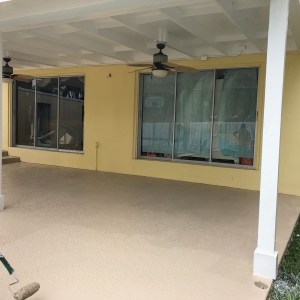

We refresh bedrooms, update bathrooms, and install new flooring with dedicated focus. The patio sits at the bottom of the priority list, aging quietly in the background. Then the first barbecue invitation arrives, and the cracked concrete demands attention. The pavers have lost their color and their appeal.
If an exterior upgrade is in your plans, broadening your material search pays dividends. Large format tiles have transitioned from specialty product to standard recommendation for modern outdoor living. Their expansive, nearly seamless surfaces create a visual continuity that traditional materials cannot achieve.
This article examines why they excel, which compositions withstand the elements, and what installation genuinely requires.
Why Size Matters Outdoors
Tile professionals classify any piece with an edge longer than 15 inches as large format. Common dimensions include 24x24, 32x32, and commanding 48x48 slabs.
The defining outdoor benefit is grout line minimization. Standard pavers blanket your patio in a dense network of joints. Each seam attracts weeds, provides passage for insects, and collects dirt. The maintenance cycle never ends.
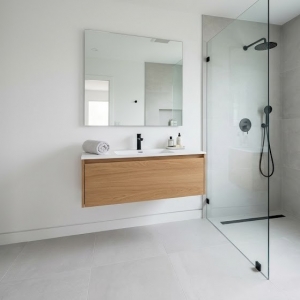
Large format tiles interrupt that pattern. They create a broad, flowing surface that makes modest patios feel more generous. The continuity strengthens when the same material extends from your interior rooms to your outdoor terrace. The transition becomes imperceptible.
These tiles also serve outdoor kitchen counters, fire pit borders, and step faces. Applying them across multiple features weaves the landscape into a cohesive design.
Material Selection: Porcelain Over Ceramic
Outdoor conditions punish incorrect material choices. Indoor ceramic is too absorbent for exterior exposure. Water penetrates the body, freezes, expands, and fractures the tile.
Porcelain is engineered for this environment. Its firing temperature significantly exceeds that of standard ceramic. The result is a vitrified, extremely dense body. Premium outdoor porcelain absorbs less than 0.5% water by weight. It survives freeze-thaw cycles that destroy porous alternatives.
When you visit a ceramic tile shop, request outdoor-rated porcelain specifically. The staff will direct you to products built for exterior stress. Economizing with the wrong material is a costly error. Failure is virtually certain, and replacement involves tearing out the entire installation.
Through-body construction offers additional protection. The color extends through the full thickness. If a heavy piece of furniture chips the surface, the damage is discreet. There is no contrasting core to highlight the flaw.
Pool Deck Safety Priorities
Pool surrounds demand heightened safety awareness. The central concern is preventing slips and falls. Smooth, wet tiles and bare feet are a dangerous pairing.
Your selected tile must demonstrate adequate friction under wet conditions. Aim for a wet Coefficient of Friction of 0.60 or higher. This typically means a matte or textured finish. Glossy surfaces may look stunning in display rooms, but they become hazardous when wet.
Heat absorption is a parallel concern. Dark tiles soak up sunlight and can reach temperatures that scorch unshod feet. Light colors reflect more energy and remain cooler. Some manufacturers have developed tiles with specialized reflective coatings that reject solar heat. These surfaces stay comfortable even in intense sun. Ask about this technology when you consult with a ceramic tile shop.
Texture requires balanced judgment. Insufficient grip invites accidents. Excessive roughness irritates skin and traps oils and sunscreen. A micro-textured matte finish typically provides the ideal compromise for poolside applications.
Installation Realities
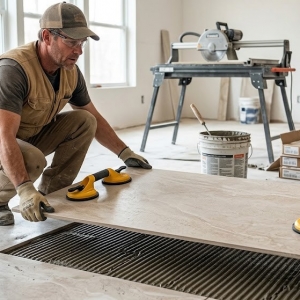
This is where do-it-yourself projects frequently stumble. Handling large format tiles outdoors is physically taxing and technically demanding. It differs substantially from interior tiling work.
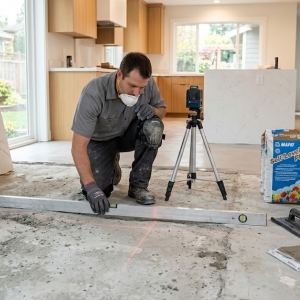
The substrate is the critical foundation. You need a fully cured, structurally sound concrete slab. Installing over uncompacted soil, sand, or aggregate guarantees failure. Ground movement will crack the tiles. The slab must also be properly sloped. Patios require approximately a quarter-inch of fall per linear foot. Pool decks must direct water away from the pool, never toward it.
Lippage is the most vexing challenge. It describes the condition where adjacent tiles sit at uneven heights. Outdoors, this is a safety liability, not merely an aesthetic defect. A mechanical leveling system is essential. These devices pull tiles into perfect alignment while the adhesive cures.
Adhesive quality cannot be compromised. Outdoor installations experience extreme thermal cycling. The concrete substrate expands and contracts with temperature changes. Only a heavily modified, exterior-grade thin-set can accommodate that movement. Grout selection follows the same principle. Specify a flexible, weather-resistant formulation.
Expansion joints are mandatory. Both concrete and tile move with temperature fluctuations. Rigidly grouting every seam traps stress that eventually blows tiles loose. Maintain open perimeter joints and seal them with flexible polyurethane.
Smart Sourcing Strategy
Begin material selection well before construction starts. A specialized ceramic tile shop carries commercial-grade porcelains that mass-market retailers rarely offer. Their inventory prioritizes performance in real outdoor conditions.
Arrive with precise measurements and a thorough project description. Clarify whether the application is a pool deck, a sheltered patio, or an exposed garden path. The staff can eliminate options that look impressive under showroom lighting but fail in actual outdoor exposure.
Always take samples home. Assess them in your yard's natural light. Wet them to evaluate appearance and traction when damp. Expose them to peak sun to measure heat retention. Observe color variation between morning and afternoon.
Order surplus material. Calculate 10% to 15% above your net square footage. Cutting waste is normal, and future repairs require identical stock. Dye lots vary between production runs, so matching a later purchase is rarely possible.
Effortless Long-Term Care
Outdoor porcelain ranks among the easiest surfaces to maintain. It never requires sealing, unlike natural stone. Routine spills clean up with minimal effort.
Biological growth can establish itself in damp, shaded areas. A mild cleaning solution and stiff brush handle it effectively. Avoid harsh chemicals and aggressive pressure washing directed at grout lines. Forceful water jets gradually degrade joint material. With basic maintenance, a large format tile installation will outlast wood decking and stamped concrete by a significant margin.
Concluding Perspective
Investing in your outdoor environment enhances daily living. Large format tiles transform patios and pool decks from neglected surfaces into purposeful extensions of your home. The benefits accumulate: reduced grout maintenance, straightforward cleaning, and a contemporary aesthetic that unifies interior and exterior spaces.
The guidelines are firm and non-negotiable. Specify outdoor-rated porcelain. Respect slip resistance requirements near water. Engineer the concrete substrate with care. Do not compromise on adhesive, grout, or leveling accessories.
Execute the technical details with discipline, and your outdoor surface will remain safe and visually appealing for decades. Installation requires effort and precision, but the result is a backyard that genuinely extends your living space.