



Francine Shimizu-Orgar has nightmares on a regular basis when her mind replays the coroner's inquest into her daughter's death, including when videos capturing Heather Winterstein's final hours in the St. Catharines, Ont., hospital were shown.
But for the mom of the 24-year-old, who died in 2021 of septic shock, shielding herself from the trauma of those videos — including one in which Winterstein collapses in the emergency department waiting room — wasn't an option.
Shimizu-Orgar said she had to know what happened to her daughter — the world had to know.
"It haunts my dreams," she told CBC in an interview from her cozy St. Catharines home's kitchen, about three weeks after the inquest concluded with dozens of recommendations.
"I have nightmares as a result of seeing the video and hearing the testimony."
The three-week inquest heard that Winterstein, an Indigenous woman, sought treatment in the hospital's emergency department two days in a row for severe body pain.
The doctor who assessed her the first day, Dec. 9, 2021, attributed her symptoms to “social issues,” citing a history of substance use and anxiety disorder in his doctor's notes. She was sent home with a Tylenol and a bus ticket, and told to return to the hospital if her condition worsened.
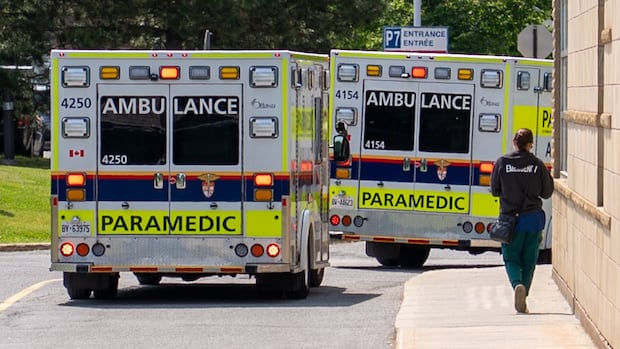
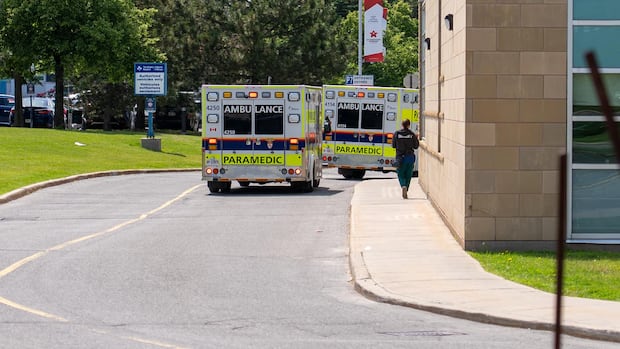
The next day, she returned to the hospital by ambulance in excruciating pain. The inquest heard the triage nurse only glanced at Winterstein for three to five seconds from a distance during her assessment. Winterstein was sent to the waiting room, where she languished for 2½ hours before collapsing.
Although hospital rules said Winterstein should have been reassessed every 15 minutes to see if her condition was deteriorating, that didn’t happen even once.
The family’s longtime search for answersWinterstein's family pushed for years for an inquest, hoping to get answers into how and why she died. Heather was a member of the Cayuga Nation with ties to Six Nations of the Grand River.
"I knew that something was wrong with that night she died," said Shimizu-Orgar. "I felt it in my heart. I feel vindicated."
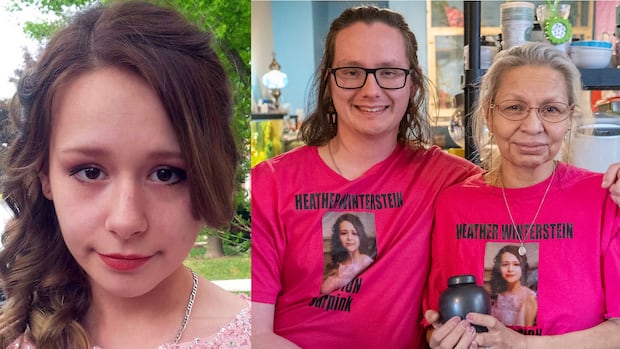
 Heather Winterstein, 24, first sought hospital emergency care while experiencing body pain. Her death resulted in a weeks-long inquest last month. (Submitted by Jill Lunn)
Inquest juries are limited to categorizing cause of death to five means: natural, suicide, homicide, undetermined or accident. In Winterstein’s case, her death was ruled an accident. The jury also found Winterstein died from septic shock, the most severe stage of sepsis, arising from a bacterial infection, and that delayed treatment played a role in her death.
Shimizu-Orgar said she'd hoped the jury's findings would help her peace.
"But hearing what actually occurred, that will haunt me forever," she said. "You can't unhear what you've heard. You can't unsee what you've seen.
"This is going to stay with me forever."
Still, she said it was important that she and her family be witnesses to the inquest proceedings, including that final video.
"If it wasn't seen, then her voice would never have been heard, and it would never have come out."
Concerns over possible anti-Indigenous biasShimizu-Orgar said she believes anti-Indigenous bias and biases related to homelessness and substance use played a part in Winterstein's treatment and death.
Lynn Guerriero, president and CEO of Niagara Health, which runs what's now known as Marotta Family Hospital, testified during the inquest that she was “struggling” to point to anti-Indigenous racism as a factor in Winterstein’s death, as front-line staff repeatedly told her they didn’t know the patient's background.
But, Guerriero acknowledged, "There's absolutely systemic racism and Indigenous racism in health care.” She also said she still wonders whether “unconscious bias” relating to intravenous drug use and housing instability might have played larger roles in the way Winterstein was treated.
We're going to work for change. Our work is not done.- Francine Shimizu-Orgar, Heather Winterstein's motherIn the wake of Winterstein's death and prior to the inquest, Niagara Health had already taken steps toward change. They include:
Becoming the first hospital in Ontario to formalize an agreement with the Indigenous Primary Health Care Council to improve Indigenous health outcomes and address health-care inequities.Forming an Indigenous Health Services and Reconciliation Team.Installing Indigenous art in its hospitals and urgent-care centres.The jury's 68 recommendations are aimed at the Ministry of Health, Niagara Health, Niagara's regional paramedic service, Niagara Regional Police and the College of Nurses of Ontario. The bulk of them target Niagara Health alone or in conjunction with other agencies.
In a statement to CBC News on Friday, Niagara Health said, "Heather Winterstein’s death was a tragedy, which is why Niagara Health fully participated in the coroner's inquest. The jury determined the manner of death to be accidental, and we have accepted all of the jury’s recommendations. Work to implement them is already underway."
Family plans foundation in Heather's honourWinterstein's brother, Ronan Shimizu-Obee, 22, said he's found "some peace" now that the circumstances surrounding her death have been made public.
 Francine Shimizu-Orgar, holding an urn containing her daughter's ashes, and Winterstein's brother Ronan Shimizu-Obee, left, say they'll keep advocating for better health-care services for Indigenous people in the Niagara region to carry on her legacy. (Diona Macalinga/CBC)
"It's really scary to know we were kept in the dark for four years. We didn't know anything.
"This could happen to anybody. With our system, and how it's going, it's not just an Indigenous issue — it's everyone's issue."
Francine and her son plan to honour Winterstein's memory by establishing a foundation in her name that would include scholarships for young people who aspire to improve health care for Indigenous people.
The family also hopes the lessons learned from her daughter's death, including the sweeping recommendations, will make it less likely other families with a loved one similar to Winterstein will have to endure such a loss.
"It's not something I would hope another family … has to go through," said Francine. "I seriously hope that nobody ever has to experience that kind of trauma."
She said her family will continue to speak out to improve health-care outcomes in hospitals.
"We're going to work for change. Our work is not done."
Francine said her daughter fought until her last breath to get the care she desperately needed.
"She did everything she could for herself. I'm quite proud of her for doing that."