







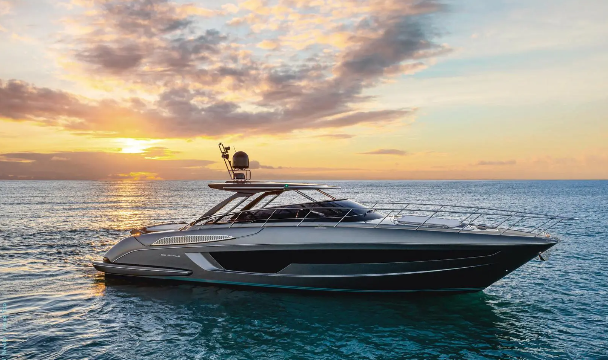
Owning a yacht is often associated with freedom and luxury, but the real picture becomes clearer when you look closely at 50 foot yacht expenses. From my experience working alongside buyers evaluating models like the Princess F50 and Azimut 50 Fly, the purchase price is only the entry point into a much broader financial commitment that unfolds over years of ownership.
Understanding the True Purchase Cost
The listed price of a 50-foot yacht can vary widely depending on brand, configuration, and condition. A new model such as the Princess F50 typically ranges between $1.2M and $1.8M, while pre-owned yachts like a 3–5-year-old Azimut 50 Fly can be found between $700K and $1.1M. What many first-time buyers overlook is how optional upgrades influence the final cost. Stabilization systems like Seakeeper can add $50,000 to $80,000, while upgraded navigation packages from Garmin or Raymarine may increase the price by another $30,000 to $60,000.
In real transactions, I’ve seen two nearly identical 50-foot yachts differ by over $200,000 simply due to interior finishes and onboard systems. Choosing between standard laminate interiors and handcrafted wood cabinetry, for example, significantly impacts both upfront cost and long-term resale value.
Annual Operating Costs: The Ongoing Commitment
Once the yacht is delivered, the ongoing costs begin immediately. For most 50 Foot Motor Yachts, annual operating expenses typically fall between 10% and 15% of the purchase price. For a $1M yacht, that translates to roughly $100,000 to $150,000 per year.
Fuel consumption depends heavily on usage. A typical 50-foot motor yacht cruising at 20 knots may burn 60–90 liters per hour. For owners cruising around 150–200 hours annually, fuel costs alone can reach $15,000 to $25,000. Maintenance is another major factor. Routine engine servicing, hull cleaning, and teak deck care often total $40,000 to $70,000 per year, especially in saltwater environments like Florida or the Mediterranean.
Docking fees vary dramatically by location. In premium marinas such as Monaco or Ibiza, annual berthing can exceed $60,000, while more moderate locations may cost around $20,000 to $35,000. Insurance typically adds another 1% to 1.5% of the yacht’s value annually.
Hidden Costs That First-Time Owners Miss
One of the most underestimated aspects of yacht ownership is the accumulation of hidden costs that are not immediately visible during purchase.
Taxes, Survey, and Legal Fees
Depending on the jurisdiction, taxes can add 5% to 20% to the purchase price. In addition, professional surveys—especially those conducted by SAMS-certified inspectors—often cost 1% to 2% of the yacht’s value. Legal documentation and registration can add several thousand dollars more, particularly for international buyers.
Equipment and Upgrades
Many yachts are delivered with only basic equipment. Owners frequently invest an additional $30,000 to $100,000 in essentials such as tenders, upgraded anchors, safety systems, and advanced electronics. For example, adding a high-quality tender with an outboard engine can easily cost $15,000 to $25,000 alone.
Depreciation and Resale Impact
Depreciation is a silent but significant cost. A new 50-foot yacht can lose 30% to 40% of its value within the first five years. However, brands like Princess, Sunseeker, and Ferretti tend to retain value better due to strong global demand and brand reputation. I’ve personally seen a well-maintained Sunseeker Manhattan resell within weeks, while lesser-known brands remained on the market for months.
Five-Year Ownership Perspective
Looking beyond annual costs, experienced buyers often evaluate ownership over a five-year horizon. For a $1M yacht, total ownership costs—including depreciation, maintenance, docking, and fuel—can reach approximately $1.1M to $1.3M over five years.
In one case, a client who purchased a Beneteau Gran Turismo 50 for around $950,000 spent roughly $120,000 annually on operating costs. After five years, the yacht was resold for $580,000. When factoring in depreciation and operating expenses, the total cost of ownership exceeded $1.2M.
This long-term perspective is critical. It shifts the decision from “Can I afford to buy this yacht?” to “Can I sustain ownership over time without compromising my lifestyle?”
Is a 50 Foot Yacht Worth It?
A 50-foot yacht sits in what many consider the ideal range for private ownership. It offers enough space for family cruising, typically accommodating 6–8 guests overnight, while still being manageable for owner-operators or a small crew. Compared to larger yachts, it strikes a balance between luxury, usability, and cost control.
From a lifestyle standpoint, it delivers exceptional value. Weekend cruising, island hopping, and coastal exploration become easily accessible. From a financial standpoint, however, it requires disciplined planning. Buyers who approach ownership with a clear understanding of costs—especially operating expenses and depreciation—tend to have far more satisfying experiences.
Ultimately, owning a 50-foot yacht is less about the initial purchase and more about managing the full financial lifecycle. Those who treat it as both a lifestyle asset and a long-term commitment are the ones who truly unlock its value.
Strategic Buying Decisions and Cost Optimization
Choosing the right yacht is not just about preference—it directly impacts your long-term financial efficiency. In the 50-foot segment, decisions between new and pre-owned vessels, propulsion systems, and brand tiers can significantly alter total ownership costs.
New vs. Pre-Owned Value Strategy
For most first-time buyers, pre-owned yachts between 3 to 5 years old represent the optimal balance. These yachts have already absorbed the steepest depreciation curve while still offering modern technology and reliable performance. For example, a 3-year-old Azimut 50 Fly may be priced 20%–30% lower than its original value, yet still delivers nearly identical onboard experience.
New yachts, on the other hand, provide customization and warranty advantages. Buyers opting for new builds—such as a fully customized Sunseeker Manhattan 55—often prioritize layout personalization and the latest onboard systems. However, this comes with longer delivery timelines and higher upfront capital exposure.
Engine Configuration and Efficiency
Engine choice is another critical factor. Traditional shaft drives are robust and cost-effective, while Volvo Penta IPS systems improve maneuverability and fuel efficiency. In practice, IPS systems can reduce fuel consumption by up to 15% in cruising conditions and simplify docking—especially valuable for owner-operators navigating tight marinas.
For owners planning frequent short trips and marina hopping, this efficiency translates into both cost savings and ease of use over time.
Brand Selection and Resale Liquidity
Brand is not just a status symbol—it is a financial strategy. Well-established brands such as Princess, Sunseeker, and Ferretti consistently demonstrate stronger resale liquidity. In active brokerage markets, these yachts attract more inquiries and shorter listing periods.
I’ve seen a Princess F50 in excellent condition receive multiple offers within 30 days, while lesser-known brands struggled despite competitive pricing. For buyers considering future resale, choosing a globally recognized brand can reduce holding risk.
Usage Strategy: When Ownership Makes Sense
Beyond costs, the decision to own a yacht should align with actual usage patterns. Financially, ownership becomes justifiable only when usage reaches a certain threshold.
Owners who spend fewer than 10 days per year on the water are often better suited to chartering. Between 20 and 50 days, fractional ownership or yacht management programs provide a hybrid solution. However, once usage exceeds 60 days annually, owning a yacht becomes more cost-effective and operationally convenient.
This is especially true for those who keep their yachts in prime cruising regions such as Southeast Asia, the Mediterranean, or South Florida, where spontaneous weekend trips and short coastal voyages are part of the lifestyle.
Balancing Lifestyle and Financial Reality
The appeal of owning a 50-foot yacht lies in its versatility—it offers enough space for entertaining, extended cruising capability, and a manageable operational profile. Models within this range continue to dominate the global market because they align well with both lifestyle aspirations and practical ownership considerations.
However, the financial reality remains clear: ownership requires planning beyond the purchase price. Evaluating total cost, selecting the right brand, and aligning usage with investment are essential steps.
For buyers entering the market, the most effective approach is to combine market research with professional guidance. Reviewing real transaction data, conducting sea trials, and working with experienced brokers ensures that every decision—from model selection to final negotiation—is grounded in both data and real-world experience.
In the end, a 50-foot yacht is not just a purchase—it is a long-term commitment to a lifestyle defined by freedom, precision, and the open sea. ??