



Introduction
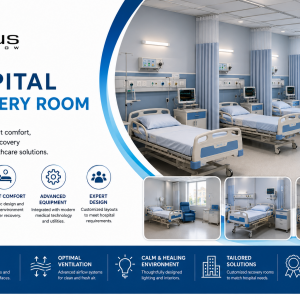
Recovery Room Manufacturers develop solutions that help hospitals create organized and functional environments for patients recovering after surgery, anesthesia, or medical procedures. These solutions can combine clinical infrastructure, medical utilities, equipment-support systems, monitoring arrangements, emergency facilities, infection-control features, and workflow planning. The final configuration depends on the hospital's patient capacity, clinical services, available space, equipment requirements, and applicable healthcare standards.
Patient Recovery Bedspace Solutions
One of the primary solutions involves planning suitable patient-care positions.
Each position can provide adequate space for the patient, healthcare professionals, monitoring devices, infusion equipment, respiratory equipment, and emergency access.
Patient Monitoring Solutions
Recovery areas require appropriate patient observation.
Manufacturers can support infrastructure for bedside monitoring equipment used to assess parameters such as heart rate, blood pressure, oxygen saturation, respiratory rate, ECG, temperature, and other clinically relevant indicators.
Central Monitoring Solutions
Larger recovery areas may benefit from centralized monitoring.
Selected information from multiple bedside monitors can be displayed at a central nursing station, helping staff maintain awareness of patients while continuing direct clinical observation.
Medical Gas Solutions
Medical gases can form an important part of recovery room infrastructure.
Depending on clinical requirements, patient positions may include oxygen, medical air, and vacuum outlets connected to suitable hospital medical gas systems.
Suction Solutions
Suction facilities can support airway management and other clinical procedures.
Central vacuum outlets or portable suction arrangements can be incorporated according to the requirements of the recovery area.
Electrical Infrastructure Solutions
Recovery rooms operate several medical devices simultaneously.
Solutions can include medical-grade electrical outlets, grounding, essential circuits, power distribution, cable management, and equipment connections designed in coordination with qualified electrical professionals.
Emergency Power Solutions
Critical medical devices may require reliable power.
Emergency power and UPS arrangements can be planned according to the hospital's engineering requirements and the power needs of essential monitoring and treatment equipment.
Emergency Care Solutions
Recovery areas need quick access to emergency resources.
Depending on hospital protocols, manufacturers can plan dedicated spaces or infrastructure for crash carts, defibrillators, airway-management equipment, oxygen, suction, emergency medications, and resuscitation resources.
Equipment Integration Solutions
Modern recovery areas contain numerous medical devices.
Manufacturers can coordinate beds, monitors, infusion pumps, respiratory devices, medical gases, suction, electrical services, lighting, and communication systems within individual patient-care positions.
Equipment Mounting Solutions
Wall-mounted and ceiling-mounted supports can help organize equipment.
These systems can keep monitors and other devices accessible while reducing floor congestion and maintaining clear working space around patients.
Modular Recovery Room Solutions
Modular wall and ceiling systems can integrate multiple clinical services.
Depending on project requirements, modular solutions may accommodate medical gases, electrical connections, lighting, communication points, equipment supports, and other infrastructure.
Nursing Station Solutions
A properly positioned nursing station can support clinical observation and coordination.
It can accommodate central monitoring displays, workstations, communication systems, documentation facilities, and access to frequently used supplies.
Communication Solutions
Recovery staff often coordinate with operating theatres, wards, intensive care units, emergency departments, and other clinical services.
Communication infrastructure can include nurse call systems, telephones, intercoms, and data connections.
Storage Solutions
Organized storage helps staff access essential supplies efficiently.
Manufacturers can plan storage areas for medications, consumables, monitoring accessories, respiratory equipment, protective equipment, and emergency supplies.
Infection-Control Solutions
Recovery environments should support effective infection-prevention procedures.
Solutions can include cleanable surfaces, hand hygiene facilities, organized equipment storage, controlled access, and appropriate environmental arrangements.
Privacy Solutions
Patients may require examinations, treatment, and personal care during recovery.
Curtains, partitions, screens, and appropriate patient spacing can provide privacy while preserving necessary clinical access.
Lighting Solutions
Recovery areas require suitable illumination for patient observation and clinical procedures.
General, bedside, task, and examination lighting can be incorporated according to the functions of the room.
HVAC and Environmental Solutions
Environmental control is another important part of recovery room planning.
Manufacturers can coordinate with qualified HVAC professionals to address temperature, humidity, ventilation, airflow, filtration, and other environmental requirements.
Safe Patient Transfer Solutions
Patients may move between operating theatres, recovery areas, wards, ICUs, and diagnostic departments.
Recovery room layouts can incorporate suitable doorways, corridors, turning areas, and clear transfer routes to support movement of patients and equipment.
Fire and Life-Safety Solutions
Recovery spaces require suitable fire and life-safety provisions.
Depending on applicable requirements, these may include fire detection, alarms, emergency lighting, fire protection equipment, accessible exits, and evacuation routes.
Waste Management Solutions
Appropriate waste-management arrangements help maintain a clean and organized clinical environment.
Waste containers and segregation facilities can be incorporated according to the hospital's waste-management procedures.
Customized Recovery Room Solutions
Every hospital has different clinical requirements.
Manufacturers can customize patient positions, medical utilities, equipment supports, monitoring arrangements, storage, modular infrastructure, and other components according to available space, patient volume, workflow, and equipment selection.
Installation and Commissioning Support
Recovery room solutions may also include installation and commissioning assistance.
Technical teams can test relevant medical gas connections, electrical systems, communication infrastructure, equipment supports, lighting, and other installed components before the room becomes operational.
Maintenance and Technical Support
Long-term reliability is important in clinical environments.
Depending on the service arrangement, manufacturers or authorized technical teams may provide preventive maintenance, inspections, troubleshooting, repairs, replacement components, and technical support.
Future-Ready Infrastructure
Hospitals may need to upgrade equipment or modify workflows over time.
Flexible infrastructure and modular systems can help accommodate new monitoring devices, additional equipment, technology upgrades, or changes in patient-care requirements.
Conclusion
The solutions developed by Recovery Room Manufacturers can cover the clinical infrastructure and technical systems needed for an organized recovery environment. These may include patient-care positions, monitoring infrastructure, medical gases, suction, electrical and emergency power systems, emergency facilities, equipment integration, modular construction, nursing stations, communication systems, storage, infection-control features, privacy, lighting, HVAC coordination, safe transfer routes, and customized infrastructure. Hospitals should determine the final solution according to their clinical requirements, facility design, equipment needs, workflow, and applicable healthcare and engineering standards.
FAQs
1. What solutions are developed by Recovery Room Manufacturers?
Recovery Room Manufacturers can develop solutions for patient bedspaces, monitoring systems, medical gases, suction, electrical infrastructure, emergency power, equipment integration, modular construction, storage, communication, infection control, lighting, ventilation, and customized recovery environments.
2. Can recovery room solutions include medical gas systems?
Yes. Depending on clinical requirements, patient-care positions can be provided with oxygen, medical air, and vacuum outlets connected to appropriate hospital medical gas infrastructure.
3. How do modular systems benefit recovery rooms?
Modular wall and ceiling systems can integrate medical gases, electrical services, lighting, communication points, and equipment supports into an organized clinical environment.
4. Can manufacturers customize recovery room solutions?
Yes. Solutions can be adapted to patient capacity, available space, clinical services, equipment selection, staff workflow, and future expansion requirements.
5. Do recovery room solutions include technical support?
Depending on the service agreement, manufacturers or authorized technical teams may provide installation, commissioning, preventive maintenance, troubleshooting, repairs, and technical assistance.
Read Our Previous Blog----------->What elements should be considered in a Recovery Room Setup?