



Introduction
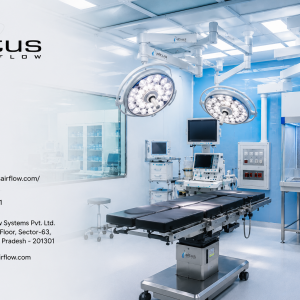
Equipment positioning is an important consideration in an operation theatre designed with a laminar airflow arrangement. Surgical lights, ceiling pendants, monitors, instrument tables, and other fixtures can influence the movement of air supplied through the filtration system.
A Modular OT With Laminar Airflow requires coordinated planning so that equipment locations are compatible with the intended airflow pattern and clinical activities.
1. Identifying the Critical Operating Area
The surgical table and surrounding working zone should be identified before equipment positions are finalised. This helps the design team understand where the intended airflow coverage is most important.
2. Planning Ceiling-Mounted Equipment
Surgical lights, monitors, and pendants should be coordinated with the ceiling supply arrangement. Their positions and dimensions should be reviewed to minimise unnecessary obstruction.
3. Considering Equipment Height and Movement
Ceiling-mounted equipment may move or rotate during procedures. The design review should consider its operating range and potential interaction with the airflow path.
4. Positioning Instrument Tables
Instrument tables should be arranged according to clinical workflow while considering the intended airflow coverage. Their placement should be assessed during representative operating conditions.
5. Coordinating With HVAC Design
Equipment layouts should be reviewed alongside filter dimensions, diffuser locations, and return air arrangements. Integrated drawings help identify potential conflicts before installation.
6. Performing Airflow Visualisation
Approved smoke visualisation can help show how air moves around installed fixtures and equipment. It may reveal disturbances that require further engineering review.
7. Verifying the Final Arrangement
After installation, the airflow system should be assessed using appropriate velocity measurements and other commissioning tests. Results should be compared with the approved project criteria.
Conclusion
Proper equipment positioning supports the intended airflow arrangement by considering the surgical zone, ceiling fixtures, equipment movement, and clinical workflow. Coordinated planning and post-installation verification help identify airflow disturbances. Altus Airflow offers modular OT solutions designed around room layouts, equipment requirements, and airflow specifications.
Frequently Asked Questions (FAQs)
1. Why does equipment positioning matter in a laminar airflow theatre?
Equipment can obstruct or redirect air movement, potentially affecting the intended airflow pattern.
2. Which equipment should be considered during ceiling planning?
Surgical lights, monitors, pendants, and other ceiling-mounted fixtures should be included.
3. Can instrument tables affect airflow?
Yes. Their position and height may influence airflow around the operating area.
4. How can equipment-related airflow disturbance be identified?
Airflow visualisation and suitable velocity measurements can help identify disturbances.
5. When should equipment positioning be finalised?
It should be coordinated during the design stage and verified after installation.