


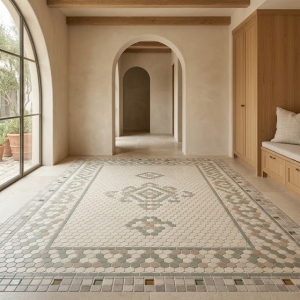




You have decided to use mosaics in your bathroom. Excellent choice—they conform beautifully to sloping shower floors and add a rich, textured aesthetic. But now you are stuck at the material crossroads. Glass, ceramic, or porcelain? All three arrive on mesh-backed sheets. From a distance, they look interchangeable. Yet once water, steam, and daily scrubbing enter the picture, each one behaves like a completely different product.
Make the wrong selection, and you will live with chipped edges, slippery danger zones, or grout that turns permanently black. Let us examine the actual performance differences. No marketing spin. Just straightforward, useful advice.
Glass Mosaics
Begin with glass. This is the luminous, light-enhancing option. Light passes through the clear top layer and reflects off the coloured backing underneath. That effect makes even a tiny, windowless bathroom feel significantly brighter and more spacious.
Glass is completely non-porous. Water cannot penetrate it. Mold and bacteria have nowhere to grow on the tile itself. Cleaning takes seconds.
But glass has serious disadvantages. Smooth glass becomes dangerously slippery when wet. Never put it on a shower floor unless the product features a textured coating. You will also see every water spot and soap film immediately. Plan to wipe it down after almost every shower.
Installation is more demanding. You must use white thin-set mortar. Grey mortar will show through the translucent glass and change the tile's colour entirely. Your installer needs genuine experience, or you will regret the messy outcome.
Ceramic Mosaics
Ceramic is the traditional, wallet-friendly path. It starts as clay, gets fired in a kiln, and then receives a liquid glass glaze baked onto the top. All colour and pattern live exclusively within that glaze layer.
Ceramic is typically the cheapest option. It cuts easily—your installer can score and snap it without expensive wet saws. That keeps labour costs lower.
The big weakness is the glaze. The clay body underneath remains porous. If a dropped shampoo bottle chips the glaze, raw clay becomes exposed. That exposed clay will absorb water like a sponge. In a constantly wet shower environment, that leads to mold growth and eventual crumbling.
Save ceramic for dry zones. It works well on a vanity backsplash or in a powder room. Keep it away from shower floors and steam showers. It simply cannot handle continuous moisture exposure.
Porcelain Mosaics
Porcelain is ceramic's tougher, denser cousin. It uses finer clay and fires at much higher temperatures. The result is an incredibly hard, dense tile. Water absorption is near zero. The colour often runs all the way through, so if a chip occurs, the damage is far less noticeable than with glazed ceramic.
That density makes porcelain heavy. Cutting it requires a good wet saw with a diamond blade. Installation takes more time and specialised skill.
But for a bathroom, this density is a tremendous advantage. Porcelain is the clear winner for shower floors. It withstands constant water exposure without any degradation. It also comes in matte finishes that offer excellent slip resistance. If you need a tile that survives daily punishment, this is your answer.
The Grout Factor
Here is an uncomfortable truth about all three materials. The tile itself almost never fails. The grout fails first.
Mosaics mean hundreds of tiny grout lines. Standard grout is essentially cement. It absorbs water, soap residue, and dirt. No matter whether you select glass, ceramic, or porcelain, you must protect those joints.
In a wet bathroom, use epoxy grout. It is non-porous. It resists stains and mould. It costs more and sets quickly, so your installer needs to work fast. But it saves you from scrubbing black mould out of the lines one year later.
If you choose standard cement grout, seal it immediately and reseal it every twelve months. Never skip this maintenance.
Installation Realities
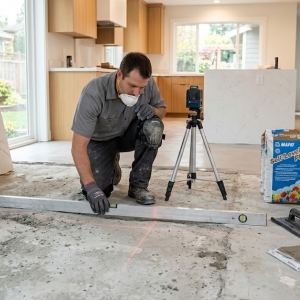
Do not assume all mosaics install identically. Glass demands a perfectly flat wall. Because light passes through the tile, any bump or dip in the drywall shows through as an ugly shadow.
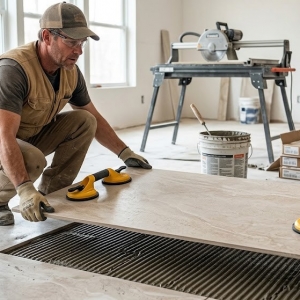
Porcelain is heavier. The wall substrate must support that extra weight. Your installer needs the correct trowel size to ensure full mortar coverage. Air pockets behind porcelain can cause cracking when you step on it.
Ceramic is the most forgiving. It hides minor wall imperfections better than glass. But it still needs a solid base. Trust your installer. If they recommend levelling the wall before tiling, let them do their job.
Sourcing the Right Material
Never order these tiles based on a website photo alone. Computer screens distort colours and textures dramatically. A "white" glass tile might look blue or grey under your actual bathroom lighting. You need to see and touch the surface. Is the glass smooth or frosted? Is the porcelain matte or polished? You will walk on this barefoot. Comfort and safety are not optional.
That is why you should visit a local ceramic tile shop. Hold the sheets in your hands. Bend them to see how the mesh backing flexes. Check the mounting—are any small pieces falling off the sheet? Loose tiles create a nightmare during installation. Staff at a ceramic tile shop can also answer your technical questions. They will tell you which thin-set works best for glass or which porcelain has the proper slip rating for a shower floor.
When you are designing your mosaic tiles bathroom, a trip to a ceramic tile shop should be your first step. They can also verify batch consistency because mosaic colours shift between production runs. You need every tile from the same batch. A good ceramic tile shop will help you with that verification. For a successful mosaic tiles bathroom, nothing beats seeing the materials in person at a ceramic tile shop. The staff can also advise on how many sheets to order for your specific floor plan.
Making the Final Choice
So which material wins? There is no universal champion. It depends entirely on where the tile goes.
If you are tiling a shower wall or a vanity backsplash, glass is a strong contender. It reflects light and repels water perfectly. Just accept that you will wipe down water spots often.
If you are on a strict budget and tiling a dry powder room, ceramic works fine. It is cheap and installer-friendly.
But for any wet area—especially a shower floor—porcelain is the undisputed winner. It is dense, durable, and slip-resistant. It handles daily shower abuse without flinching.
Final Thoughts
When planning your mosaic tiles bathroom renovation, always match the material to the environment. Do not put slippery glass on the floor. Do not put porous ceramic inside a steam shower. Understanding the physical properties of each option is essential. Take your time at the showroom.
Talk to your installer about the substrate and the mortar. If you respect the differences between glass, ceramic, and porcelain, your mosaic tiles bathroom will look stunning and last for decades. Start by visiting a ceramic tile shop to see real samples. Get the material right, and you will never worry about it again.