


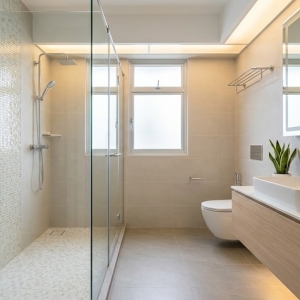




Achieving a bathroom that radiates polish and refinement represents a common homeowner objective. Mosaic tiles contribute textural interest and color variation where plain expanses or substantial slabs simply cannot compete. Yet shower floors operate under dramatically different parameters than vanity surfaces or vertical installations. These zones endure heavy foot traffic, maintain persistent wetness, and above all, demand uncompromising attention to safety protocols.
The popularity of mosaics frequently stems from their capacity to create engaging visual dynamics. Selection decisions often follow exposure to trending digital imagery. However, before finalizing renovation plans, thoughtful evaluation proves essential. Shower environments conceal practical complexities rarely apparent in promotional materials.
When purchasing mosaic tiles for moisture-prone applications, functional imperatives must moderate aesthetic preferences. Performance under authentic conditions should inform decisions rather than display presentations.
The following five elements warrant careful examination before commitment.
1. Safety Through Slip Resistance
Traction characteristics constitute the foremost consideration. This transcends stylistic concerns—it addresses fundamental physical security.
Shower floors remain perpetually damp. Soap film accumulation creates treacherous conditions. Unprotected feet struggle for purchase. Conventional mosaic tiles sheets typically utilize flat mesh backings. While producing attractive appearances, these configurations provide inadequate traction once water intermingles with personal care products or epidermal oils.
Performance specifications offer crucial guidance. Manufacturers generally classify slip resistance using R-values or Coefficient of Friction metrics. Seek products explicitly designated for flooring rather than wall applications. Certain varieties incorporate flared perimeters or inherent surface texture within individual tesserae.
Glass mosaic tiles possess undeniable beauty and excellent water tolerance. Nevertheless, numerous styles feature reflective finishes that become genuinely hazardous under wet conditions. Matte surfaces provide superior safety profiles. Textured stone alternatives deliver reliable grip though they may accumulate particulate matter more readily. Whenever feasible, evaluate samples under flowing water. Determine whether footwear maintains stable contact. Assess whether standing feels secure. Negative responses should eliminate options irrespective of visual attractiveness.
2. Managing Grout Maintenance Demands
Diminutive tile formats inevitably multiply grout intersections. This reality seems acceptable until sanitation responsibilities intensify.
Each boundary between mosaic tiles establishes potential fungal colonization sites. Steamy bathroom atmospheres provide optimal conditions for mildew proliferation. Extended exposure causes conventional cementitious grout to discolor. Atmospheric moisture absorption produces gradual deterioration. Even epoxy formulations, despite enhanced durability, remain susceptible to perimeter staining when application quality varies.
Honestly assess maintenance commitment. Will daily abrasive cleaning become standard practice? Or will occasional rinsing prove sufficient? Those anticipating minimal upkeep should recognize that dense grout matrices in mosaic tiles installations present substantial ongoing obligations.
Management strategies exist. Epoxy grout demonstrates superior stain resistance compared to traditional alternatives. Grout sealants provide supplementary protection, though renewal becomes necessary at eighteen-to-twenty-four-month intervals. Recognize that elaborate patterns compound application complexity. Installation deficiencies—voids or inconsistent depths—permit moisture migration beneath visible surfaces. Concealed mold populations develop undetected. Eventually, bonding agents fail completely.
3. Visual Scale and Spatial Dynamics
Detailed patterns interact distinctively with limited volumes. Within confined ensuite configurations, excessive ornamentation may produce overwhelming sensations.
Mosaic tiles inherently attract visual attention inward. Complex arrangements—interwoven strands, alternating geometries—introduce considerable visual stimulation. Within generous master bathroom environments, such complexity appears intentional and sophisticated. Within restricted HDB or apartment shower compartments, identical treatments may generate claustrophobic responses.
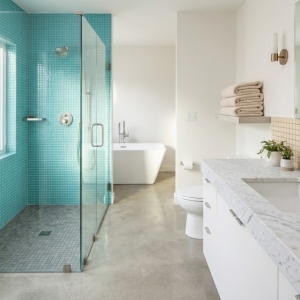
Occasionally, expansive porcelain field tiles achieve more tranquil outcomes. Reduced joint visibility creates spatial expansion perceptions. Those determined to incorporate mosaic tiles might restrict application to horizontal accent bands or recessed storage niches. Comprehensive floor coverage fundamentally transforms spatial character.
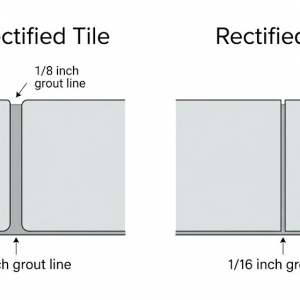
Restrained coloration minimizes visual mass. Dark mosaic tiles effectively conceal soiling yet immediately reveal water spotting. Lighter tones display dust and soap residue more conspicuously. Grout line proportion relative to tessera dimensions significantly influences overall appearance. Excessive mortar surrounding diminutive pieces appears ponderous. Minimal joints surrounding larger formats appear streamlined. Coordinate grout width with tile scale appropriately.
4. Material Longevity Under Continuous Wetting
Not all mosaic tiles demonstrate equivalent endurance under persistent moisture exposure.
Porcelain generally represents the optimal selection for wet environments. Its vitrified composition absorbs negligible liquid. Ceramic alternatives prove more susceptible to fracture under concentrated loading. Natural stone varieties—marble, travertine—maintain porosity requiring protective treatment. Treatment degradation permits water infiltration. Permanent discoloration follows rapidly.
Mesh substrate quality requires evaluation. Durable attachment prevents individual piece displacement. Inferior substrates deteriorate in humid conditions, causing lippage where certain tesserae protrude above adjacent elements. Such irregularities create tripping hazards and debris accumulation sites.
Stone selections require hardness verification. Soft varieties exhibit scratching from abrasive particles transported on shower footwear. Accelerated wear becomes evident within abbreviated timeframes. Contemporary porcelain convincingly replicates natural stone aesthetics without corresponding fragility. Thermal and moisture exposure produces no dimensional instability.
5. Installation Proficiency and Supplier Selection
Ultimately, procurement source verification proves essential. Shower floor installation demands precision impossible for kitchen splashback projects. Appropriate gradient calculation ensures complete drainage toward primary collection points.
Inadequate slope generation produces standing water accumulation. Persistent moisture compromises structural substrates. Only experienced practitioners comprehend appropriate gradients for mosaic tiles foundations. Sheet-mounted formats require meticulous leveling. Improper alignment risks shower receptor leakage.
This emphasizes supplier selection significance. Patronize an established tile shop in Singapore. Avoid exclusive dependence upon digital commerce or undifferentiated hardware retailers. Physical showroom visitation enables material handling and joint alignment evaluation.
Engage personnel regarding project specifics. Inquire about recommended setting materials for floor-mounted mosaic tiles. Established operations understand optimal bedding compounds for various substrate orientations. They additionally provide climate-specific counsel. Singapore's tropical humidity affects material behavior distinctly from temperate regions.
Financial planning must incorporate installation realities. Artisans command premium compensation for mosaic tiles compared to large-format alternatives. Increased cutting and jointing requirements justify elevated labor costs. Incorporate these expenses into comprehensive budgets. Labor cost minimization frequently generates expensive remediation requirements subsequently.
Final Reflections
Shower material selection necessitates harmonizing visual preferences with extended performance. Mosaic tiles introduce distinctive personality and individual expression into bathroom environments. However, they impose greater maintenance obligations than unified surfaces.
Safety must remain paramount. Grout maintenance feasibility requires confirmation. Material density specifications need verification. Artisan expertise regarding installation complexity must be established. Thorough evaluation across these five dimensions ensures decades of leak-free, secure shower floor performance.
Renovation endeavors generate legitimate enthusiasm. Prevent material selection missteps from becoming expensive disappointments. Invest adequate time in comprehensive planning, confirm all technical parameters, and proceed with well-substantiated confidence.