


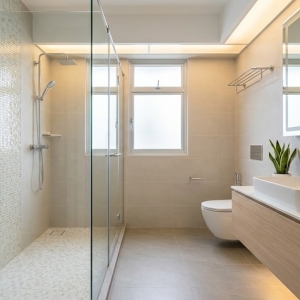




You enter a design showroom. A display wall stops you in your tracks. The pattern mesmerizes, the palette soothes, and the surface texture invites touch. Then the practical question emerges: do you buy by the panel or by the kilo?
This question haunts countless residential projects involving decorative finishes. Most clients begin with aesthetics. They're drawn to the luxurious veining or crystalline sparkle that defines high-end mosaic tiles. Yet the attachment method determines whether your vision becomes reality smoothly or painfully.
The choice between sheet-mounted and individual pieces transcends simple cost comparison. It cascades through your project timeline, skilled labor requirements, and the final aesthetic quality of your installation. Let's dissect both approaches so you can proceed with clarity rather than doubt.
Defining the Fundamental Options
Let's clarify terminology. When browsing mosaic tiles, retailers generally stock two distinct presentations.
Sheet-mounted products arrive factory-bonded to flexible carriers. Each tessera adheres to mesh or paper in predetermined arrangements. You simply unroll these assemblies and affix them to your substrate. Typical dimensions run approximately thirty centimeters square.
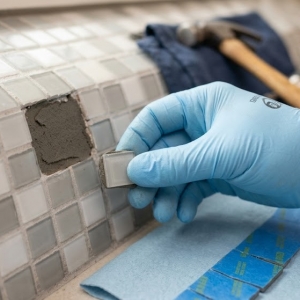
Individual pieces ship as separate entities. Envision smooth river stones, translucent glass drops, or discrete ceramic tesserae. No carrier constrains them during transport. You handle each unit separately, buttering with adhesive and placing one by one.
The completed installation might look identical once grouted. However, the path to completion differs radically. This operational distinction drives virtually every downstream decision you'll face.
Why Contractors Prefer Sheets
Trade professionals typically recommend sheet-mounted mosaic tiles for most renovations. Their reasoning centers on productivity.
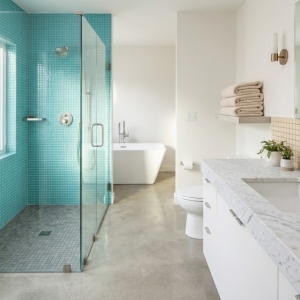
Installing carrier-backed assemblies provides built-in reference points. Factory-engineered spacing removes variability between units. For generous floor planes or full-height wet room enclosures, visual consistency is non-negotiable. Sheets eliminate the mental burden of maintaining uniform grout joints.
The grouting phase compresses significantly as well. Fixed geometric patterns allow faster progress per labor hour. This velocity matters enormously when paying installation crews and controlling overall expenditure.
Yet constraints exist. Sheet-mounted systems assume planar surfaces and rectilinear edges. Window reveals, service penetrations, or curved bulkheads necessitate precision cutting. Sectioning mesh-mounted assemblies demands specialized tooling—frequently wheeled nippers or CNC water jets.
Mistakes carry penalties. Destroying one tessera compromises an entire carrier section. Often these damaged remnants prove unusable elsewhere because fractured backing won't accept fresh adhesive properly. These solutions excel for sweeping, uninterrupted planes like shower receptors or feature elevations. For modest decorative inserts, they may represent overkill.
The Freedom of Loose Installation
Discrete mosaic tiles offer dramatically superior field adaptability. Rigid sheet dimensions impose no limitations. This maneuverability proves essential in confined angles or asymmetric floor plans characteristic of established neighborhoods.
Picture a galley kitchen splashback behind range equipment. Electrical outlets, overhead cabinetry, and fuel supply lines interrupt the field. Discrete pieces negotiate these interruptions fluidly. You never struggle to wrap rectangular carriers around cylindrical obstructions. You simply build the clearance organically.
Inventory efficiency improves if quantities prove insufficient mid-installation. Misaligned carriers against out-of-plumb substrates generate unsightly perimeter voids. Discrete mosaic tiles authorize pattern modifications to mask underlying irregularities. You can translate the layout to hide substrate deficiencies.
The exchange is temporal. Sequencing individual units requires methodical attention. Capable artisans maintain reasonable pace, yet still lag behind deploying pre-organized carriers. This prolonged duration materially increases labor expenditure versus factory-mounted alternatives.
Moreover, joint uniformity requires constant surveillance. Inattentive application yields chaotic grout lines. These joints become the visual signature of the completed elevation. Therefore, you must dedicate supplementary effort to alignment verification throughout the process.
Environmental Performance Factors
Considering tropical building conditions, atmospheric variables demand respect. Ambient moisture remains elevated perpetually. These circumstances influence adhesive chemistry over service life.
Mosaic tiles need effective moisture management, especially in splash zones. Discrete pebble formats permit superior hydraulic conductivity compared to impervious sheet arrays. Water doesn't stagnate behind continuous mesh barriers identically. In humid climates, preventing entrapped dampness safeguards long-term integrity.
Both formats perform satisfactorily in conditioned interiors. The decisive element involves specifying compatible adhesive chemistry for your selected product. Conventional Portland cement mortars may prove inadequate for dense glass mosaic tiles or polished metallic surfaces. Always verify manufacturer literature before mobilization.
Securing Your Materials
Design intentions collapse without dependable procurement. Supply logistics become critical here.
Numerous owners resort to e-commerce for perceived convenience. Transporting fragile mosaic tiles internationally involves substantial hazard. Consignments routinely arrive with impact damage and chipped arrises. Reverse logistics prove costly and protracted.
Physical inspection at local merchants provides superior risk management. An established tile shop in Singapore permits tactile quality evaluation. You can assess surface relief directly. You can detect batch-to-batch chromatic variation. Vitreous units occasionally harbor concealed damage on bed faces that digital images obscure.
Neighborhood vendors maintain inventories of purpose-designed spacers and carrier systems for sheet-mounted applications. They possess empirical knowledge of adhesive systems compatible with local hygrothermal conditions. Additionally, you avoid international freight charges completely.
When engaging personnel at a tile shop in Singapore, investigate the specific carrier substrate employed. Some paper backings hydrolyze following grouting; others demand mechanical removal prior to final washdown. Foreknowledge eliminates downstream frustration.
Decision Framework
So which approach belongs in your home? Practical wisdom suggests these criteria.
Favor sheet-mounted when:
- Zones remain expansive and geometrically simple.
- Pattern regularity must be achieved under time pressure.
- Engaged tradespeople emphasize throughput.
- Configurations emphasize orthogonal lines.
Favor discrete when:
- Zones remain intimate or geometrically complex.
- Multiple service penetrations populate the field.
- Bespoke, hand-crafted appearance carries priority.
- Field flexibility outweighs schedule compression.
Remember lifecycle costing. Sheet-mounted products often command premium unit pricing reflecting manufacturing value-add. Conversely, discrete selections typically accumulate higher daily costs through extended setting durations. Compute aggregate investment, not simply material outlay.
Final Thoughts
Both systems serve identical purposes: producing elegant, serviceable vertical surfaces. Neither claims objective superiority. Suitability depends completely on your particular boundary conditions and program constraints.
Hastily executed discrete installations betray their nature instantly. Carelessly measured sheet applications leave permanent gaps impossible to remediate post-cure. Dialogue with your applicator is essential. Share physical samples promptly. Declare your procurement intentions explicitly.
Proceed deliberately. Visit a tile shop in Singapore to survey available ranges. Assess mosaic tiles beneath natural daylight. Chromatic perception shifts under artificial sources and shadow patterns, profoundly affecting spatial character.
The team at any professional tile shop in Singapore can demonstrate how different mosaic tiles behave under various lighting scenarios. Don't hesitate to request samples from your preferred tile shop in Singapore to evaluate within your actual space. Most importantly, ensure your tile shop in Singapore provides adequate technical documentation for your selected mosaic tiles regarding adhesive compatibility and maintenance protocols.
Renovations impose adequate psychological load. Don't allow finish selection to amplify anxiety. Internalize the trade-offs comprehensively. Specify the format harmonizing with your spatial context and your applicator's operational preferences. Once specified, implementation becomes routine. And that is entirely achievable.